
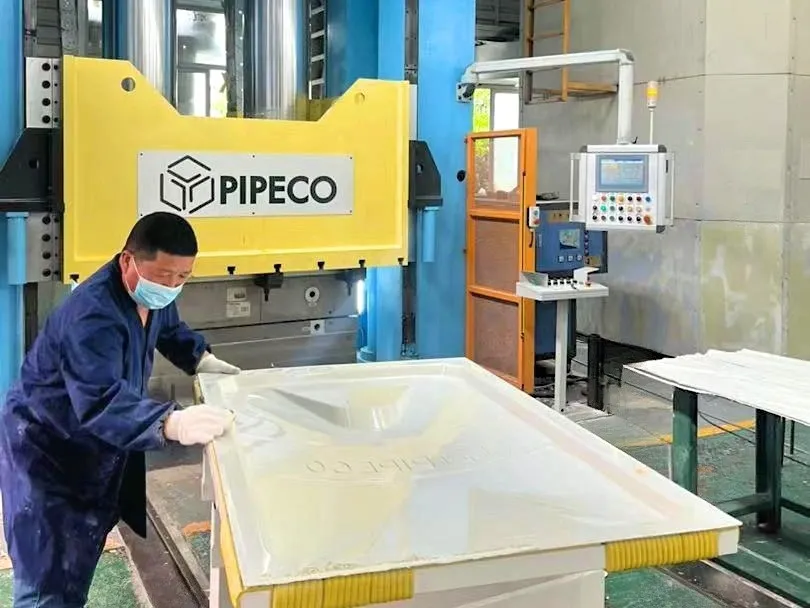
Modern water storage systems are expected to operate safely for decades under continuously changing mechanical loads, environmental conditions, and installation scenarios. Finite Element Analysis (FEA) has become one of the most valuable engineering tools for designing high-performance GRP water tanks, helping engineers verify structural integrity before production begins.
Rather than relying solely on empirical calculations or traditional safety factors, engineers today use numerical simulation to evaluate stress distribution, panel deformation, hydrostatic pressure, wind resistance, seismic performance, and steel support behavior. This engineering-based approach significantly improves safety, reliability, material efficiency, and long-term service life.
Water tanks may appear to be relatively simple storage structures, but in reality they are subjected to complex mechanical loads throughout their operational life. Every filled tank continuously experiences hydrostatic pressure, while outdoor installations must also withstand wind loads, temperature fluctuations, seismic activity, foundation settlement, and repeated filling and draining cycles.
Without detailed engineering verification, these combined loading conditions can create localized stress concentrations that gradually lead to panel deformation, bolt loosening, leakage, excessive structural deflection, or premature component fatigue. Although these issues may not be immediately visible after installation, they often become increasingly significant over years of service.
Finite Element Analysis enables engineers to simulate these real-world operating conditions before manufacturing begins. By converting the complete tank assembly into thousands or even millions of interconnected finite elements, engineers can predict how every panel, reinforcing rib, bolt connection, sealing interface, and steel support member will respond under different loading scenarios.
For modern GRP sectional water tanks, FEA is no longer limited to research institutions or large infrastructure projects. It has become an increasingly practical engineering tool for manufacturers seeking to deliver reliable, lightweight, and cost-effective water storage solutions that comply with international design standards.
Finite Element Analysis (FEA) is a numerical simulation technique used to evaluate how a structure behaves under various physical loading conditions. Instead of testing multiple physical prototypes, engineers create a highly detailed digital model of the water tank and calculate how each individual element responds to applied forces.
For GRP water tanks, the simulation typically includes every major structural component, including:
Each component is assigned accurate material properties such as elastic modulus, Poisson's ratio, density, tensile strength, and allowable stress limits. The software then calculates structural responses under specified loading conditions, allowing engineers to evaluate deformation, stress distribution, displacement, safety factors, and overall structural stability.
| Simulation Item | Engineering Purpose |
|---|---|
| Hydrostatic Pressure | Evaluate internal water pressure acting on tank walls. |
| Wind Load | Verify structural stability for outdoor installations. |
| Seismic Load | Assess earthquake resistance and dynamic behavior. |
| Thermal Expansion | Predict structural movement caused by temperature variation. |
| Support Frame Analysis | Verify beam deflection and load transfer. |
| Bolt Connection Analysis | Evaluate stress concentration around fasteners. |
Compared with traditional engineering calculations, Finite Element Analysis provides significantly more detailed information because it evaluates stress and deformation across the entire structure instead of only at selected calculation points. This comprehensive understanding enables engineers to optimize designs with greater confidence while reducing the likelihood of costly field failures.
Once a sectional GRP water tank enters production, design modifications become considerably more expensive. Tooling changes, mold revisions, steel frame adjustments, and panel redesigns can increase manufacturing costs and extend project lead times.
Engineering simulation allows manufacturers to identify potential structural issues during the digital design stage, where improvements can be implemented quickly and economically. This proactive approach minimizes engineering risks while improving product consistency.
One of the greatest strengths of FEA is its ability to visualize how loads travel throughout the entire tank structure. Rather than assuming that every panel carries equal force, engineers can identify exactly where stresses accumulate and optimize reinforcement only where necessary.
This targeted optimization often results in:
For international projects involving hospitals, municipal water systems, commercial buildings, industrial facilities, and fire protection infrastructure, engineering validation through Finite Element Analysis also increases confidence during project approval and technical review processes.
Among all loading conditions affecting a water tank, hydrostatic pressure is the most fundamental and continuously acting force. Unlike uniformly distributed loads, hydrostatic pressure increases proportionally with water depth, meaning the bottom panels experience significantly higher forces than the upper sections of the tank.
Traditional engineering calculations estimate this pressure using simplified formulas. However, Finite Element Analysis reveals precisely how pressure interacts with panel geometry, reinforcing ribs, bolt connections, and supporting steel members throughout the complete structure.
By visualizing stress contours and displacement maps, engineers can determine whether the existing panel design provides adequate stiffness or whether additional reinforcement is required in specific regions.
The results obtained from hydrostatic pressure simulations form the foundation for many subsequent engineering decisions, including panel thickness selection, reinforcement layout, bolt spacing, support frame sizing, and overall structural optimization. Accurate prediction at this stage significantly improves both safety and manufacturing efficiency.
Hydrostatic pressure is generated by the weight of stored water and acts continuously on every internal surface of a water tank. Unlike concentrated loads applied at specific points, hydrostatic pressure is evenly distributed across the panel surface while increasing linearly with water depth. This unique loading characteristic makes accurate structural analysis essential for ensuring long-term safety.
In engineering practice, the hydrostatic pressure acting on a tank wall can be expressed as:
P = ρgh
Where:
Although this equation appears straightforward, the actual structural response of a sectional GRP water tank is considerably more complex. Every panel is connected by bolts, sealing gaskets, reinforcement members, and external steel supports. These components interact with one another, creating localized stiffness variations that cannot be accurately evaluated using simplified hand calculations alone.
Finite Element Analysis models the complete tank assembly, allowing engineers to observe how hydrostatic pressure is transferred through panels, ribs, bolts, corner joints, and supporting structures. Instead of evaluating only average stresses, FEA generates detailed stress contour maps across the entire tank.
One of the most valuable outputs of an FEA simulation is the visualization of pressure distribution at different elevations inside the tank.
| Tank Region | Hydrostatic Pressure | Typical Structural Response |
|---|---|---|
| Roof | None | Mainly supports self-weight and maintenance loads. |
| Upper Panels | Low | Minimal deformation with relatively low stress. |
| Middle Panels | Moderate | Progressively increasing bending stress. |
| Lower Panels | High | Maximum internal pressure requiring greater stiffness. |
| Bottom Connections | Highest | Critical load transfer area between panels and support frame. |
This pressure gradient explains why lower tank panels are frequently designed with additional reinforcement or increased structural rigidity. Without detailed simulation, designers may either underestimate the required strength or use excessive material, resulting in unnecessary manufacturing costs.
Among all outputs generated by Finite Element Analysis, the Von Mises stress distribution is one of the most widely used indicators for evaluating structural safety. It combines stresses acting in multiple directions into a single equivalent value, enabling engineers to compare the calculated stress against the allowable strength of the composite material.
For GRP water tanks, Von Mises stress plots quickly identify areas where structural loads become concentrated. These regions often include:
Stress concentrations are particularly important because structural failures rarely occur across an entire panel. Instead, cracking generally begins at localized regions where stresses significantly exceed surrounding areas. Identifying these locations before production allows engineers to modify the design while development costs remain low.
A successful design does not necessarily eliminate stress. Instead, the objective is to distribute stress as uniformly as possible throughout the structure while maintaining values well below the allowable design limits of the GRP material.
Optimized stress distribution also improves fatigue resistance, reducing the likelihood of long-term crack initiation caused by repeated filling and emptying cycles.
Stress alone does not determine whether a water tank performs satisfactorily. Excessive panel deformation can negatively affect sealing performance, bolt preload, visual appearance, and overall structural stability, even when stresses remain below allowable limits.
Finite Element Analysis predicts panel displacement under full operating conditions by calculating how each panel bends under hydrostatic loading. Engineers can visualize the exact magnitude and direction of deformation throughout the entire structure.
Typical displacement plots reveal that maximum deflection usually occurs near the center of large unsupported panel areas, while corners and reinforced regions remain comparatively rigid.
Rather than simply increasing panel thickness, engineers often improve stiffness more efficiently by redesigning rib geometry, optimizing reinforcement spacing, or adjusting support frame locations. These modifications frequently provide greater structural benefits while minimizing material consumption.
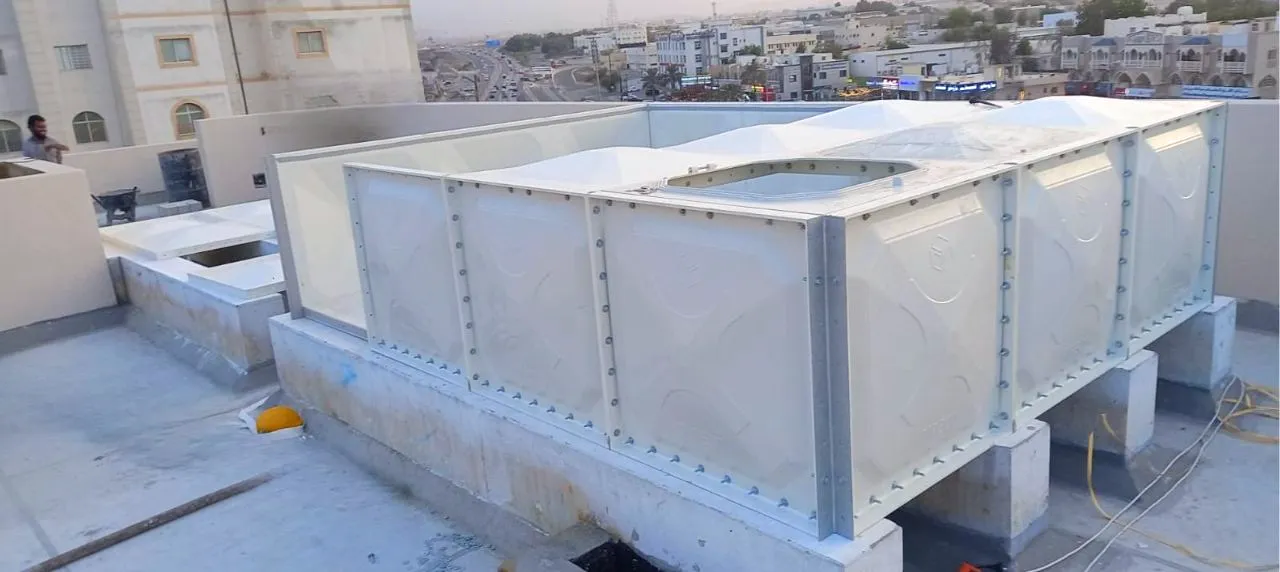
Outdoor GRP water tanks are continuously exposed to environmental forces that vary according to geographical location, installation height, surrounding buildings, and local climate conditions. Among these environmental loads, wind pressure is one of the most important considerations for elevated or exposed installations.
Wind does not act uniformly across every tank surface. Instead, pressure varies depending on wind direction, turbulence, corner geometry, and shielding from nearby structures. Finite Element Analysis enables engineers to simulate these complex loading conditions and evaluate structural stability before installation.
Typical wind load simulations evaluate:
| Engineering Objective | Benefit |
|---|---|
| Reduce excessive lateral movement | Improve operational stability. |
| Protect panel joints | Reduce leakage risk. |
| Optimize steel members | Lower material costs. |
| Improve anchorage | Increase resistance to overturning. |
For projects located in coastal regions, industrial facilities, or areas subject to seasonal storms, wind analysis becomes particularly valuable because repeated lateral loading can gradually loosen mechanical connections over many years of service.
In earthquake-prone regions, water tanks experience dynamic loading rather than simple static forces. During seismic events, both the tank structure and the stored water move simultaneously, producing complex interactions that cannot be accurately represented using conventional design methods.
Finite Element Analysis allows engineers to simulate earthquake loading by applying acceleration histories or response spectra based on applicable design standards. These simulations evaluate how structural components behave throughout the duration of a seismic event.
One particularly important phenomenon is water sloshing. During strong ground motion, the water surface oscillates inside the tank, creating additional dynamic forces that act on tank walls and roof structures. These loads may exceed those generated by hydrostatic pressure alone.
For hospitals, municipal water systems, industrial plants, commercial buildings, and emergency fire protection systems, seismic verification is increasingly specified by project owners and consulting engineers as part of the structural approval process.
Finite Element Analysis is only meaningful when the applied loading conditions and acceptance criteria are based on recognized engineering standards. Depending on the project location, engineers may perform simulations according to different international codes to ensure regulatory compliance and long-term structural reliability.
| Design Aspect | Typical Standards |
|---|---|
| Wind Loading | ASCE 7, Eurocode EN 1991 |
| Seismic Design | ASCE 7, Eurocode 8 |
| Steel Structures | AISC, Eurocode 3 |
| Composite Materials | ISO, ASTM, BS Standards |
| Water Tank Design | Applicable national and project-specific specifications |
While individual project requirements differ, combining internationally recognized engineering standards with Finite Element Analysis provides designers and project owners with greater confidence that the completed GRP water tank will perform safely throughout its intended service life.
Although GRP panels form the primary water containment structure, the long-term reliability of a sectional water tank depends equally on the performance of its supporting steel framework. The support frame transfers the combined weight of the tank, stored water, roof components, maintenance loads, and environmental forces safely into the building structure or foundation.
Many structural problems that appear to originate from GRP panels are actually caused by excessive deformation of the supporting steel members. Even small beam deflections can alter the alignment of adjacent panels, increase bolt loading, compress sealing gaskets unevenly, and eventually create leakage paths.
Finite Element Analysis enables engineers to evaluate the complete steel support system before fabrication. Rather than checking individual beams independently, FEA considers how every structural member interacts with neighboring components under realistic loading conditions.
The simulation calculates stress, displacement, load paths, and safety factors throughout the supporting structure. Engineers can immediately identify beams carrying excessive loads and optimize the arrangement before manufacturing begins.
| Engineering Objective | Benefit |
|---|---|
| Reduce beam deflection | Maintain panel alignment. |
| Optimize member size | Reduce steel consumption. |
| Balance load distribution | Improve structural stability. |
| Verify anchorage | Increase installation safety. |
| Improve load transfer | Extend service life. |
One of the greatest advantages of Finite Element Analysis is that it reveals how structural loads travel through an entire water tank system rather than evaluating isolated components. Every kilogram of stored water follows a predictable load path from the tank panels to the supporting structure and ultimately into the building foundation.
A simplified load path can be illustrated as follows:
Stored Water
↓
GRP Panels
↓
Panel Reinforcement Ribs
↓
Bolted Connections
↓
Steel Support Frame
↓
Base Structure
↓
Foundation
Any weakness along this load path may increase stress elsewhere in the structure. For example, insufficient support beneath one section of the tank can cause localized panel bending, even when the GRP material itself satisfies strength requirements.
FEA enables engineers to visualize these interactions using stress contour plots and displacement diagrams, making it much easier to identify inefficient load transfer paths before production.
GRP panels are designed to provide an excellent balance between structural strength, corrosion resistance, and low weight. However, their performance depends not only on material properties but also on panel geometry, rib configuration, thickness distribution, and connection details.
Finite Element Analysis evaluates how stresses are distributed across every panel under full operating conditions. Instead of assuming a uniform stress field, engineers obtain a detailed contour map showing precisely where loads become concentrated.
Typical high-stress regions include:
Stress contour visualization allows engineers to redesign only the necessary regions rather than increasing the thickness of the entire panel. This targeted optimization significantly improves structural efficiency while controlling manufacturing costs.
Reinforcement ribs are among the most important structural features of a GRP sectional water tank. Properly designed ribs significantly increase panel stiffness without requiring substantial additional material.
Historically, rib dimensions were often determined using previous project experience or conservative design practices. While these approaches generally produce safe structures, they may also result in unnecessary weight and increased manufacturing costs.
Finite Element Analysis enables engineers to evaluate multiple rib configurations digitally before manufacturing. Parameters that can be optimized include:
Each design iteration is evaluated for stiffness, stress distribution, displacement, and material utilization. Engineers can compare different configurations rapidly and identify the most efficient structural solution.
| Design Variable | Engineering Influence |
|---|---|
| Higher ribs | Increase bending stiffness. |
| Optimized spacing | Improve load sharing. |
| Smoother transitions | Reduce stress concentration. |
| Balanced rib layout | Improve structural uniformity. |
Instead of simply adding more reinforcement, FEA helps engineers place material only where it contributes most effectively to structural performance. This engineering philosophy supports lightweight design while maintaining high safety margins.
An effective engineering design is not necessarily the strongest possible design—it is the design that achieves the required safety with the most efficient use of materials. Excessively conservative structures increase manufacturing costs, transportation expenses, and installation difficulty without providing proportional performance benefits.
Finite Element Analysis allows engineers to balance structural strength and material efficiency by identifying regions where stresses remain significantly below allowable limits. Material in these low-stress areas can often be reduced while reinforcing only those locations experiencing higher structural demand.
This optimization strategy provides several important advantages:
For large-capacity GRP sectional water tanks used in municipal infrastructure, industrial plants, commercial buildings, and fire protection systems, even modest reductions in panel weight can produce significant savings throughout the product life cycle while maintaining the structural reliability expected by engineers and project owners.
While GRP panels and steel support structures often receive most of the attention during water tank design, bolt holes are frequently among the most critical locations from a structural integrity perspective. In sectional water tanks, thousands of bolted connections may be used to join panels, transfer loads, maintain alignment, and ensure water-tight performance throughout the service life of the system.
Every bolt hole introduces a geometric discontinuity into the structure. When loads pass through these regions, stresses are no longer distributed uniformly across the material. Instead, localized stress concentrations develop around the hole boundary. Although the average stress within the panel may remain relatively low, the stress immediately surrounding the bolt hole can be several times higher.
Finite Element Analysis allows engineers to visualize these stress concentrations with exceptional accuracy. Detailed mesh refinement around bolt holes enables the simulation to capture localized stress gradients that would otherwise be impossible to evaluate using traditional calculation methods.
By identifying high-stress zones during the design stage, engineers can implement targeted improvements without significantly increasing overall material usage.
Rather than relying on excessive safety factors, Finite Element Analysis enables engineers to solve the root cause of stress concentration through intelligent design optimization.
Flange connections serve as the primary interface between adjacent GRP panels. These connections must simultaneously transfer structural loads, maintain dimensional accuracy, and provide a reliable sealing surface throughout decades of operation.
Because flange regions experience both mechanical loading and sealing requirements, they are among the most complex areas of the entire tank structure. Even minor geometric variations can influence bolt preload, gasket compression, and stress distribution.
Finite Element Analysis helps engineers evaluate the complete behavior of flange assemblies under realistic operating conditions, including:
Simulation results frequently reveal that structural loads are not distributed evenly across every bolt location. Certain regions may carry significantly higher loads depending on panel geometry and support conditions.
| Flange Design Parameter | Engineering Impact |
|---|---|
| Flange Thickness | Influences stiffness and load distribution. |
| Bolt Spacing | Affects sealing consistency. |
| Flange Width | Controls gasket seating area. |
| Corner Geometry | Influences local stress concentration. |
| Surface Flatness | Improves sealing performance. |
Through iterative simulation, engineers can optimize flange geometry to achieve both structural strength and long-term sealing reliability.
A water tank can only perform successfully if it remains leak-free throughout its service life. While structural strength is essential, sealing performance is equally important. In sectional GRP water tanks, sealing is typically achieved through elastomeric gaskets positioned between adjoining panel flanges.
The effectiveness of a gasket depends heavily on compression pressure. Insufficient compression may allow water leakage, while excessive compression can accelerate gasket aging, permanent deformation, and material degradation.
Finite Element Analysis provides engineers with a powerful tool for evaluating gasket behavior under realistic operating conditions. By modeling both structural components and sealing materials, simulations can predict contact pressure distribution throughout the entire flange interface.
Uniform gasket compression is one of the primary objectives of modern water tank engineering. Even when average compression levels appear acceptable, localized low-pressure regions may become leakage initiation points over time.
The most reliable sealing systems are not necessarily those with the highest bolt torque. Instead, they are systems that achieve uniform gasket compression across the entire sealing surface.
Finite Element Analysis enables engineers to verify this condition before manufacturing and installation, significantly reducing the risk of field leakage issues.
Leakage is one of the most common concerns among water tank owners, facility managers, and consulting engineers. While leakage may appear to be a simple sealing issue, its root causes often originate from structural behavior.
Examples include:
Finite Element Analysis helps engineers understand the relationship between these factors and sealing performance. Instead of treating leakage as an isolated problem, the entire structural system can be evaluated as an integrated assembly.
For example, simulation may reveal that a seemingly minor support beam deflection causes flange rotation, which reduces gasket compression in a specific area. Correcting the support structure may completely eliminate the leakage risk without modifying the sealing material itself.
This systems-based engineering approach represents a significant advancement over traditional trial-and-error methods and contributes directly to improved reliability and reduced maintenance costs.
Water tanks rarely operate under constant loading conditions. Most installations experience repeated filling and draining cycles throughout their service life. Each cycle generates small but measurable changes in stress and deformation within the tank structure.
Although a single loading cycle may not cause damage, millions of repeated cycles can gradually initiate fatigue-related deterioration in critical components. This phenomenon is particularly important for:
Advanced Finite Element Analysis can estimate fatigue life by combining stress results with material fatigue properties. Engineers can then identify regions where long-term cyclic loading may become a concern and implement preventive design improvements.
For municipal infrastructure, industrial facilities, hospitals, hotels, and commercial buildings where uninterrupted water storage is essential, fatigue analysis provides an additional layer of engineering confidence.
Water tanks are often exposed to significant temperature fluctuations throughout their operational life. Outdoor installations may experience daily temperature changes, seasonal weather variations, and solar heating effects that influence structural behavior.
Different materials expand and contract at different rates. GRP panels, steel supports, bolts, and sealing materials all possess unique thermal properties. When these components are connected within a single assembly, temperature-induced movement can generate additional stresses.
Finite Element Analysis enables engineers to simulate thermal expansion effects and evaluate:
By incorporating thermal loading into the design process, engineers can improve durability and reduce the likelihood of long-term maintenance issues caused by environmental conditions.
One of the greatest advantages of Finite Element Analysis is that it enables engineers to optimize structural performance without unnecessarily increasing material consumption. In modern GRP water tank engineering, success is no longer measured by using the thickest panels or the largest steel members. Instead, the objective is to achieve the required structural safety with the minimum amount of material while maintaining long-term reliability.
Traditional design methods often rely on conservative assumptions to compensate for uncertainties in loading conditions and structural behavior. Although this approach generally produces safe structures, it may also result in excessive material usage, higher transportation costs, and reduced manufacturing efficiency.
FEA allows engineers to evaluate where structural material is truly required. Areas experiencing relatively low stress can often be redesigned with reduced thickness or simplified reinforcement, while high-stress regions receive additional structural support. This targeted engineering approach produces a more balanced and efficient design.
| Optimization Objective | Engineering Benefit |
|---|---|
| Reduce unnecessary material | Lower production cost. |
| Improve stress distribution | Increase structural reliability. |
| Optimize panel geometry | Enhance stiffness without significant weight increase. |
| Optimize reinforcement layout | Improve overall structural efficiency. |
| Reduce transportation weight | Lower logistics expenses. |
For large municipal and industrial water storage projects, even a small reduction in the weight of each panel can generate significant savings when multiplied across hundreds of panels. At the same time, maintaining adequate safety margins ensures that the finished structure continues to satisfy long-term performance requirements.
Lightweight engineering has become a major objective across the construction, infrastructure, transportation, and composite manufacturing industries. GRP sectional water tanks already provide substantial weight advantages compared with conventional concrete or welded steel tanks, but further optimization remains possible through advanced structural simulation.
Finite Element Analysis allows engineers to evaluate multiple lightweight design concepts before manufacturing begins. Rather than removing material indiscriminately, engineers identify regions where stiffness can be maintained through improved geometry rather than increased thickness.
Typical lightweight optimization strategies include:
The resulting design often achieves lower overall weight while maintaining equivalent or even higher structural performance. Reduced weight also simplifies transportation, handling, installation, and future maintenance activities.
The most efficient structure is not the heaviest one. It is the structure in which every kilogram of material contributes effectively to carrying structural loads.
Unlike isotropic materials such as structural steel, Glass Fiber Reinforced Plastic (GRP) exhibits complex mechanical behavior influenced by fiber orientation, resin content, manufacturing quality, and laminate construction. These characteristics make accurate material modeling particularly important during Finite Element Analysis.
Modern engineering simulations incorporate representative material properties obtained through laboratory testing and internationally recognized standards. Depending on the design stage and project requirements, engineers may evaluate:
By accurately representing composite material behavior, FEA provides a realistic prediction of panel performance under hydrostatic loading, environmental forces, and long-term service conditions. This engineering approach significantly improves confidence during product development and technical validation.
One of the most cost-effective applications of Finite Element Analysis occurs before production tooling is manufactured. Once compression molds for GRP panels have been fabricated, major design modifications become significantly more expensive and may delay project schedules.
Digital simulation enables engineers to refine panel geometry, reinforcement layout, flange dimensions, and connection details before any physical mold is produced. Multiple design iterations can be evaluated within a relatively short period, allowing optimization to occur during the virtual development stage rather than after production has begun.
Typical design decisions supported by FEA include:
By identifying potential structural issues early, manufacturers reduce engineering risk, improve production efficiency, and minimize costly tooling modifications.
Every water storage project presents unique engineering challenges. Tank dimensions, installation environments, seismic requirements, wind exposure, support conditions, and applicable design standards all vary according to project location and customer specifications.
A modern engineering workflow integrates Finite Element Analysis throughout the product development process to ensure that each custom tank configuration satisfies both structural and operational requirements.
| Engineering Stage | Primary Objective |
|---|---|
| Project Requirements | Define capacity, dimensions, loading conditions, and applicable standards. |
| 3D CAD Modeling | Create the complete digital assembly. |
| Material Definition | Assign composite and steel material properties. |
| FEA Simulation | Evaluate stress, displacement, and safety factors. |
| Design Optimization | Improve structural efficiency. |
| Engineering Verification | Confirm compliance with project requirements. |
| Mold Manufacturing | Produce optimized tooling. |
| Production and Inspection | Manufacture and verify finished components. |
This digital engineering workflow significantly reduces uncertainty throughout product development while improving communication between designers, manufacturers, project consultants, and end users.
As water storage capacity increases, structural complexity grows rapidly. Large-capacity sectional tanks experience greater hydrostatic pressure, longer unsupported spans, higher cumulative panel loads, and more demanding support frame requirements. These challenges make Finite Element Analysis increasingly valuable during engineering design.
For tanks serving municipal infrastructure, industrial facilities, airports, hospitals, educational campuses, and commercial developments, engineers must evaluate not only individual panels but also the behavior of the complete structural system.
Large-scale simulations may include:
The ability to evaluate these combined loading scenarios before manufacturing greatly improves engineering confidence and helps ensure reliable long-term operation under demanding service conditions.
Finite Element Analysis has transformed the way modern GRP sectional water tanks are designed, verified, and manufactured. Instead of relying solely on empirical experience or conservative assumptions, engineers now have access to advanced digital tools capable of predicting structural performance with remarkable accuracy.
From hydrostatic pressure and wind loading to seismic response, bolt connection behavior, gasket compression, and material optimization, every major aspect of tank performance can be evaluated during the design stage. This engineering-driven approach not only improves structural safety but also enhances manufacturing efficiency, reduces material consumption, and supports sustainable product development.
As global demand for reliable, lightweight, and durable water storage systems continues to grow, Finite Element Analysis will remain an indispensable technology for delivering high-performance GRP water tanks capable of meeting the increasingly complex requirements of infrastructure projects worldwide.
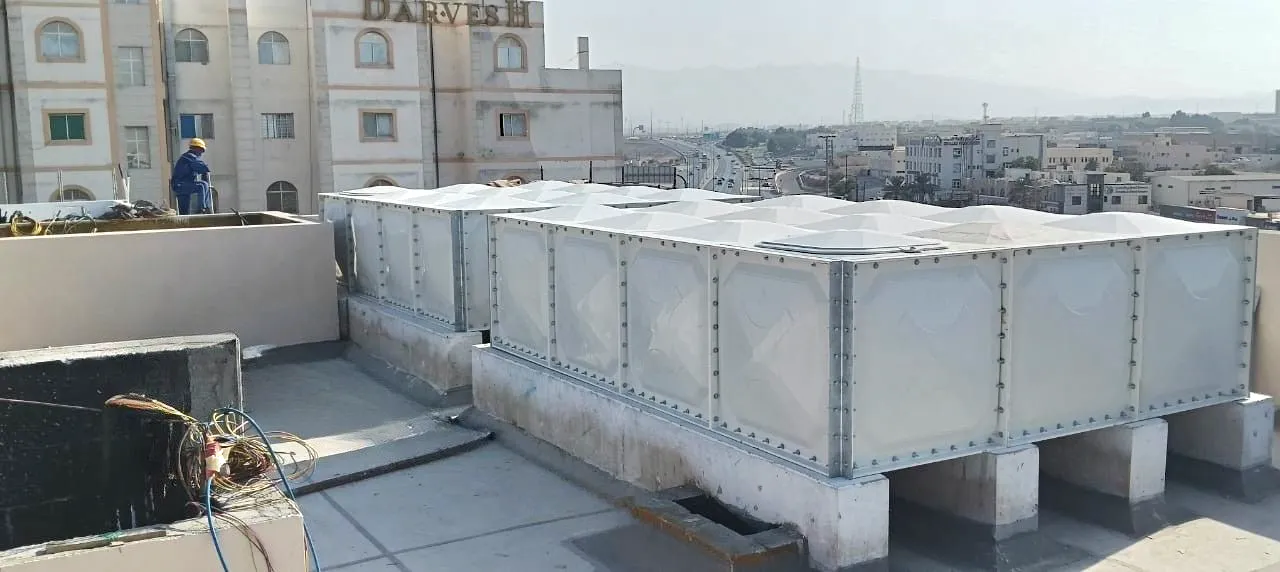
To better understand the practical value of Finite Element Analysis, consider a typical engineering scenario involving the development of a large-capacity sectional GRP water tank for a commercial infrastructure project.
The project required a modular water storage system capable of operating continuously under variable water levels while meeting strict structural safety requirements. In addition to hydrostatic loading, the tank had to withstand seasonal wind conditions, daily temperature fluctuations, maintenance access loads, and long-term operational cycles over an expected service life exceeding several decades.
Instead of proceeding directly to mold manufacturing, engineers first developed a complete three-dimensional digital model of the tank assembly. Every major component—including GRP panels, reinforcement ribs, flange connections, bolts, steel support members, and the base frame—was incorporated into the simulation model.
The first Finite Element Analysis evaluated the baseline design under full hydrostatic loading. Stress contour plots revealed that while most panels remained well within allowable design limits, several localized regions experienced elevated stress concentrations.
These areas included:
Although the design satisfied basic strength requirements, the simulation indicated opportunities for further optimization before production tooling was manufactured.
Rather than increasing the thickness of every panel, engineers introduced a series of targeted improvements based on simulation results.
Each modification was verified through additional simulation until stresses became more evenly distributed throughout the complete structure.
Following structural optimization, the engineering team confirmed that the revised design could be manufactured efficiently using compression molding processes without introducing unnecessary tooling complexity.
Because most improvements involved geometry rather than additional material, the optimized design achieved higher structural efficiency without significantly increasing production costs.
Modern GRP water tanks are expected to satisfy much more than simple water storage requirements. Owners, consulting engineers, and contractors increasingly evaluate products according to structural reliability, lifecycle cost, installation efficiency, sustainability, and long-term maintenance performance.
Engineering-driven design places scientific analysis at the center of product development. Instead of relying solely on historical experience, each design decision is supported by numerical simulation, engineering calculations, and continuous optimization.
This methodology delivers measurable advantages throughout the product lifecycle.
| Engineering Approach | Customer Benefit |
|---|---|
| Finite Element Analysis | Higher structural confidence. |
| Digital optimization | Lower material waste. |
| Simulation before tooling | Reduced engineering risk. |
| Optimized support structures | Simplified installation. |
| Improved sealing analysis | Lower leakage risk. |
| Balanced structural design | Longer service life. |
Engineering simulation also improves communication between manufacturers, design institutes, contractors, and project owners by providing objective technical data that supports engineering decisions throughout the project.
At PIPECO, we believe that reliable water storage begins long before manufacturing starts. Every successful GRP water tank is the result of careful engineering, material selection, structural analysis, precision manufacturing, and rigorous quality control.
Our engineering team works closely with customers to understand project requirements including tank capacity, installation environment, structural loading conditions, available installation space, and applicable engineering standards. This collaborative approach allows each solution to be tailored to the specific needs of the project rather than relying on one-size-fits-all designs.
For custom projects, digital engineering tools support every stage of product development—from concept design and structural evaluation to manufacturing preparation and final production.
By combining engineering expertise with manufacturing capability, PIPECO strives to deliver durable, efficient, and cost-effective water storage solutions for commercial, industrial, municipal, and infrastructure applications.
Providing complete engineering information at the RFQ stage allows manufacturers to recommend the most appropriate tank configuration and perform preliminary structural evaluations more efficiently.
| Information Required | Engineering Purpose |
|---|---|
| Tank dimensions | Determine structural layout. |
| Required capacity | Select suitable panel configuration. |
| Installation location | Evaluate environmental loads. |
| Indoor or outdoor installation | Assess wind and weather exposure. |
| Support foundation details | Verify structural support conditions. |
| Applicable engineering standards | Confirm compliance requirements. |
| Water type | Select appropriate materials. |
| Special project requirements | Support customized engineering solutions. |
The more complete the project information provided during the early design stage, the more effectively engineers can optimize the water tank configuration for safety, performance, manufacturing efficiency, and overall project cost.
Finite Element Analysis (FEA) is a computer-based engineering simulation method used to predict how a water tank behaves under various loading conditions before manufacturing begins. By dividing the entire structure into thousands of small elements, engineers can evaluate stress distribution, deformation, structural stiffness, and overall safety. For GRP sectional water tanks, FEA helps optimize panel design, steel support structures, bolted connections, and sealing performance while reducing engineering risks.
GRP water tanks operate under continuous hydrostatic pressure and may also experience wind loads, seismic forces, thermal expansion, and repeated filling cycles. FEA enables engineers to analyze these complex conditions digitally, allowing structural improvements before production. This results in higher reliability, longer service life, and lower lifecycle costs.
Yes. One of the greatest advantages of FEA is material optimization. Instead of increasing thickness throughout the entire structure, engineers reinforce only those regions experiencing higher stresses. This approach reduces unnecessary material consumption while maintaining the required safety factors and structural performance.
Leakage is often caused by uneven structural deformation rather than defective sealing materials. FEA predicts panel deflection, flange movement, bolt loading, and gasket compression under realistic operating conditions. By optimizing these factors during the design stage, engineers can significantly reduce the likelihood of leakage throughout the service life of the tank.
Engineering simulations typically evaluate hydrostatic pressure, wind loads, seismic loading, thermal expansion, maintenance loads, steel support reactions, bolt preloads, and long-term operational loading cycles. Depending on project requirements, additional analyses may also be performed for transportation, installation, or foundation settlement.
Yes. By identifying stress concentrations, excessive deformation, and fatigue-sensitive regions before production, engineers can optimize the structure for long-term durability. Better stress distribution generally reduces the likelihood of cracking, leakage, and premature structural deterioration.
Absolutely. Every project has unique dimensions, loading conditions, installation environments, and applicable engineering standards. FEA allows engineers to evaluate custom tank configurations and optimize structural performance according to specific project requirements instead of relying solely on standard designs.
Engineering-driven GRP water tanks are widely used in municipal water supply, commercial buildings, hospitals, industrial facilities, educational campuses, hotels, fire protection systems, residential developments, and infrastructure projects where long-term structural reliability is essential.
Yes. Engineering simulations can be performed using loading conditions and acceptance criteria based on internationally recognized design standards such as ASCE, Eurocode, ASTM, ISO, BS, and other project-specific specifications. This helps improve confidence during engineering review and project approval.
PIPECO combines engineering expertise with manufacturing experience to deliver customized GRP sectional water tank solutions. From structural evaluation and design optimization to production and quality control, our team focuses on providing reliable, durable, and cost-effective water storage systems that meet the requirements of diverse international projects.
Finite Element Analysis has fundamentally changed the way modern GRP sectional water tanks are engineered. Instead of relying solely on empirical experience or conservative assumptions, engineers can now evaluate complete structural behavior in a virtual environment long before manufacturing begins.
From hydrostatic pressure distribution and wind resistance to seismic performance, bolt connection analysis, gasket compression, steel support optimization, and material utilization, FEA provides valuable engineering insights throughout every stage of product development. These simulations enable manufacturers to improve structural safety, reduce unnecessary material usage, enhance manufacturing efficiency, and deliver products with greater long-term reliability.
As infrastructure projects continue to demand larger capacities, higher performance, and longer service life, engineering-driven design will become increasingly important. Combining advanced digital simulation with precision manufacturing allows GRP sectional water tanks to meet these evolving requirements while providing safe, efficient, and sustainable water storage solutions for customers around the world.
Whether the application involves commercial buildings, municipal water supply, industrial facilities, hospitals, educational campuses, or fire protection systems, engineering validation through Finite Element Analysis helps ensure that every water tank is designed for dependable performance throughout its operational lifetime.
Selecting the right water storage system involves much more than choosing a tank capacity. Structural integrity, material selection, manufacturing quality, installation conditions, and long-term durability all play essential roles in project success.
At PIPECO, we combine engineering analysis, customized design, and manufacturing expertise to deliver GRP sectional water tanks that meet the performance requirements of modern infrastructure projects. Our team works closely with customers to evaluate project conditions and recommend practical, cost-effective solutions tailored to specific applications.
Whether you require a standard sectional water tank or a customized engineering solution, we welcome the opportunity to discuss your project and provide professional technical support throughout the design and procurement process.
Contact PIPECO today to discuss your next GRP water tank project and discover how engineering-driven design can improve long-term performance, reliability, and value.
Experience the brand Trusted by Renowned Companies across the GLOBE.
Pipeco stands at the forefront of the market, recognized as a premier manufacturer, supplier, and exporter specializing in top-tier GRP water tanks, stainless steel water tanks, and FRP Water Tank, Fiberglass Tank, SMC Water Tank committed to delivering unparalleled quality and excellence.
Get In Touch
Email: master@pipeco.cn
Tel: 0086-576-84616026
Address: No.2 Zhaofeng Road, Xinqian Street, Huangyan District, Taizhou City, Zhejiang Province, China