
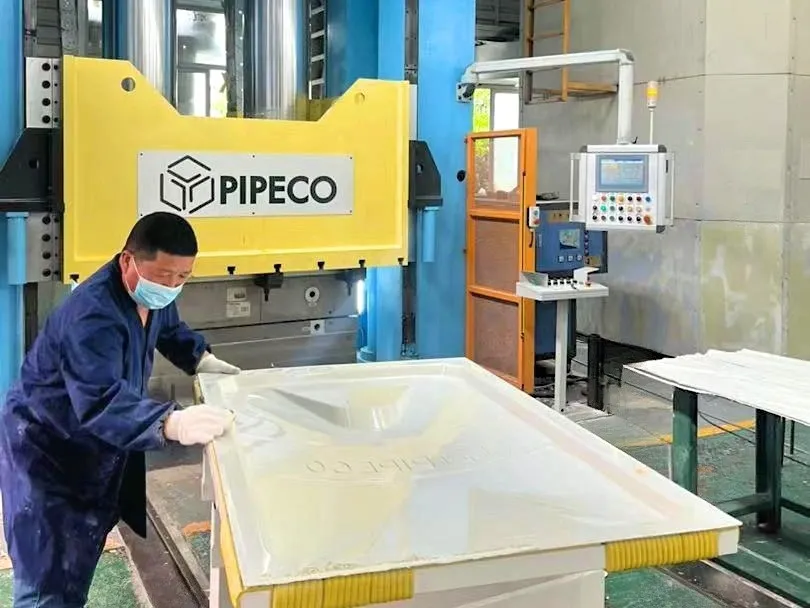
An FRP water tank (Fiberglass Reinforced Plastic tank) is a modern composite water storage system made from a combination of fiberglass reinforcement and thermosetting resin. It is widely used in residential, commercial, industrial, agricultural, and municipal water storage applications due to its excellent corrosion resistance, lightweight structure, long service life, and modular design flexibility.
Unlike traditional steel or concrete water tanks, FRP tanks do not rely on metallic structures or heavy masonry. Instead, they are built using advanced composite engineering principles that combine the strength of glass fibers with the chemical stability of resin materials, resulting in a high-performance storage system suitable for demanding environments.
At PIPECO, FRP water tank systems are designed to meet modern infrastructure requirements including potable water storage, fire protection systems, industrial process water, irrigation systems, and emergency water supply networks.
FRP stands for Fiberglass Reinforced Plastic, which is a composite material composed of two primary components:
When these two materials are combined, they form a lightweight but extremely strong composite structure capable of resisting chemical corrosion, moisture exposure, and mechanical stress over long periods of time.
The key principle of FRP materials is that the fiberglass carries the mechanical load, while the resin protects the structure from environmental degradation.
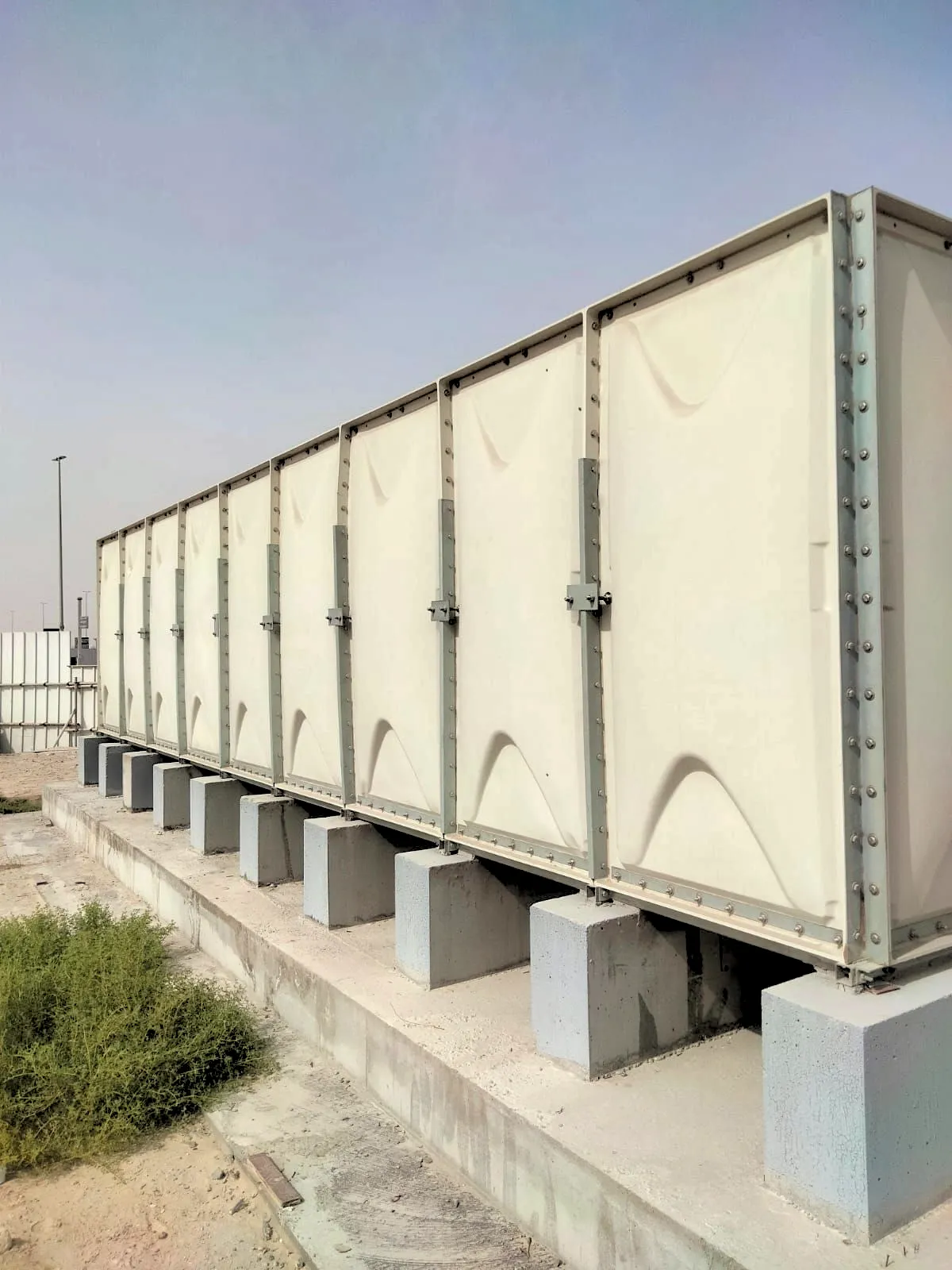
FRP water tanks are typically manufactured using advanced composite molding or panel assembly techniques depending on the structural design and application requirements.
Glass fiber mats or woven rovings are used as reinforcement materials. These fibers are carefully arranged to ensure uniform strength distribution across the tank structure.
Thermosetting resins such as unsaturated polyester or vinyl ester are applied to fully saturate the fiberglass layers. This process ensures strong bonding between fibers and matrix.
Once shaped, the composite material undergoes a curing reaction under controlled conditions. This transforms the resin into a rigid, cross-linked polymer structure.
For large-scale FRP water tanks, modular panels are manufactured separately and then assembled on-site using stainless steel bolts, sealing gaskets, and internal reinforcement structures.
FRP water tanks have become one of the most popular water storage solutions globally because they offer a balanced combination of performance, durability, and installation flexibility.
Their advantages make them suitable for both small-scale residential systems and large industrial water storage projects.
Unlike steel tanks that may rust or concrete tanks that may crack over time, FRP tanks are naturally resistant to corrosion. The resin matrix protects the fiberglass from water, chemicals, and environmental exposure.
FRP tanks are significantly lighter than steel or concrete alternatives. This reduces transportation costs, simplifies installation, and minimizes structural load requirements for supporting platforms.
High-quality FRP water tanks can operate for more than 20 years under normal conditions with minimal maintenance requirements.
Panel-type FRP tanks can be easily expanded or reconfigured according to capacity requirements. This makes them highly suitable for growing infrastructure projects.
FRP materials do not promote bacterial growth and are suitable for potable water storage systems when properly manufactured with food-grade resins.
To understand the value of FRP water tanks, it is important to compare them with traditional storage systems.
| Feature | FRP Tank | Steel Tank | Concrete Tank |
|---|---|---|---|
| Corrosion Resistance | Excellent | Poor without coating | Moderate |
| Weight | Lightweight | Heavy | Very Heavy |
| Installation | Easy modular assembly | Requires welding | Complex construction |
| Maintenance | Low | High | Moderate |
| Service Life | 20+ years | 10–15 years | 15–25 years |
FRP water tanks are widely used in multiple industries due to their versatility and reliability:
The global shift toward lightweight construction, modular infrastructure, and corrosion-resistant materials has accelerated the adoption of FRP water tanks.
In addition to structural performance, FRP systems reduce lifecycle cost, simplify installation, and improve system flexibility for modern engineering projects.
This makes FRP technology particularly valuable in regions with harsh environmental conditions such as high humidity, coastal areas, desert environments, and industrial zones.
One of the most common questions in the water storage industry is the difference between FRP (Fiberglass Reinforced Plastic) and GRP (Glass Reinforced Plastic) water tanks. In practical engineering applications, both terms are often used interchangeably, but there are subtle distinctions depending on regional standards and manufacturing practices.
FRP is a general term referring to any plastic material reinforced with fiberglass, while GRP specifically emphasizes glass fiber as the reinforcement medium. In most modern water tank systems, GRP water tanks are considered a subset of FRP systems.
From a performance perspective, both FRP and GRP tanks offer similar advantages:
At PIPECO, both FRP and GRP systems are engineered using the same composite design principles to ensure consistent hydraulic performance and structural reliability.
The performance of an FRP water tank is determined not only by the material itself but also by its structural engineering design. Modern FRP tanks are typically composed of multiple laminated layers, each serving a specific mechanical or protective function.
The inner surface is designed to be smooth, non-porous, and chemically resistant. This layer ensures hygienic water storage and prevents contamination or bacterial growth.
This is the main load-bearing section of the tank. It consists of multiple fiberglass layers embedded in thermosetting resin, providing high tensile strength and structural rigidity.
The outer layer is designed to resist UV radiation, weathering, and mechanical impact. UV stabilizers are often added to prevent degradation caused by long-term sun exposure.
The resin system plays a critical role in determining the chemical resistance, durability, and mechanical performance of FRP water tanks. Different resin types are selected based on application requirements.
Unsaturated polyester resin is the most commonly used material in FRP water tanks due to its cost-effectiveness and balanced mechanical performance. It is suitable for general water storage applications.
Vinyl ester resin provides superior chemical resistance and is often used in industrial or aggressive environments such as chemical plants, desalination systems, and wastewater treatment facilities.
Epoxy resin systems offer excellent adhesion and mechanical strength but are typically used in specialized engineering applications due to higher cost.
FRP water tanks are engineered to withstand both static and dynamic loads during their operational life. Their composite structure allows them to distribute stress efficiently across the entire tank body.
The laminated fiberglass structure enables FRP tanks to resist internal hydrostatic pressure without deformation, making them suitable for both ground-level and elevated installations.
FRP materials absorb mechanical energy effectively, reducing the risk of cracking or structural failure caused by external impact during transportation or installation.
Unlike rigid materials such as concrete, FRP composites can withstand repeated loading cycles without significant degradation in structural performance.
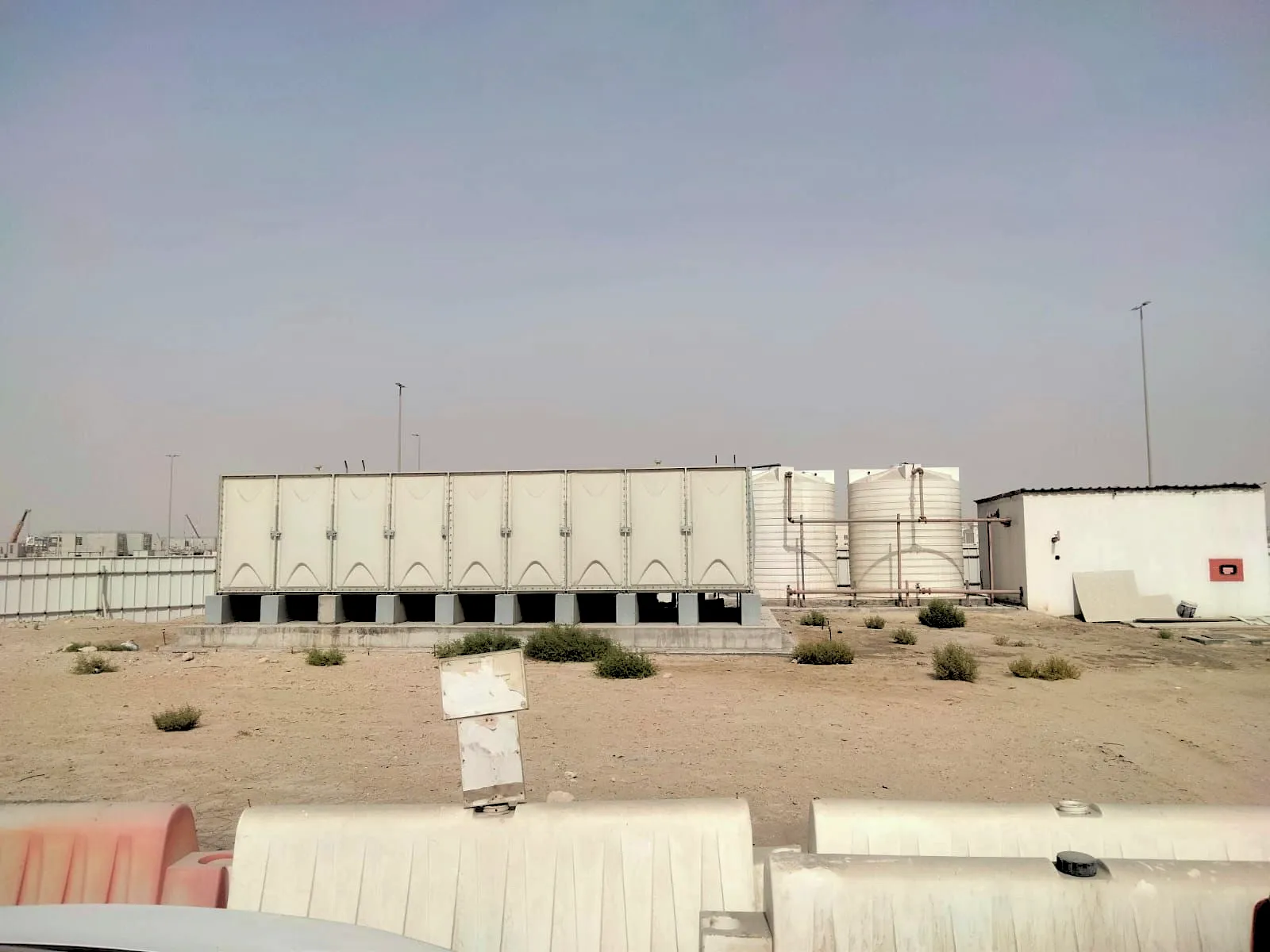
Outdoor water storage systems are constantly exposed to ultraviolet radiation, temperature fluctuations, and environmental aging. FRP water tanks are specifically engineered to maintain long-term stability under such conditions.
UV-resistant additives in the outer resin layer help prevent surface degradation, color fading, and micro-cracking caused by prolonged sun exposure.
This makes FRP tanks especially suitable for rooftop installations, desert environments, and coastal regions where environmental stress is significantly higher.
For drinking water applications, hygiene is one of the most critical design requirements. FRP water tanks provide a non-metallic, non-corrosive storage environment that reduces the risk of contamination.
The smooth internal surface minimizes sediment accumulation and prevents bacterial adhesion. When manufactured using food-grade resin systems, FRP tanks comply with potable water safety standards used in modern infrastructure projects.
Although FRP is a polymer-based composite material, its fire performance can be significantly improved through the use of flame-retardant additives and specialized resin formulations.
In engineered water tank systems, fire resistance is particularly important for installations in commercial buildings, industrial facilities, and emergency firefighting systems.
Modern FRP water tank systems contribute to sustainable infrastructure development in several ways.
Compared with traditional steel or concrete systems, FRP tanks offer a significantly lower lifecycle environmental impact when evaluated over their full operational lifespan.
The shift toward modular construction, decentralized water systems, and smart city infrastructure has increased demand for flexible and scalable water storage solutions.
FRP water tanks meet these requirements through their modular design, lightweight structure, and adaptability to different installation environments.
They are particularly suitable for:
High-quality FRP water tanks are manufactured under strict quality control systems to ensure consistent performance and long service life.
Typical quality control processes include:
These processes ensure that each FRP water tank meets the required mechanical, chemical, and hydraulic performance standards before delivery.
Selecting an FRP water tank involves much more than simply determining the required storage volume. Engineers must evaluate water demand, installation environment, structural loading, environmental conditions, maintenance accessibility, and future expansion requirements to ensure the system performs reliably throughout its service life.
A properly selected FRP water tank not only provides sufficient storage capacity but also minimizes operating costs, simplifies maintenance, and improves long-term reliability.
The first step in selecting an FRP water tank is calculating the required storage volume based on water consumption patterns and project specifications.
Typical design considerations include:
For municipal and commercial projects, designers often include additional storage capacity to accommodate population growth, seasonal demand fluctuations, or emergency water supply requirements.
FRP water tanks can be installed in a variety of configurations depending on available space, environmental conditions, and project requirements.
Above-ground installations are easier to inspect, maintain, and expand. They are commonly used in commercial buildings, factories, hospitals, schools, and industrial facilities.
Advantages include:
Underground systems maximize land utilization while protecting stored water from direct sunlight and temperature fluctuations.
Proper structural design is essential to withstand soil pressure, groundwater uplift, and vehicle loads when applicable.
Even the highest-quality FRP water tank requires a properly engineered foundation to ensure long-term structural stability.
The supporting base should provide uniform load distribution across the entire tank footprint while preventing differential settlement.
Common foundation options include:
Foundation flatness should comply with project specifications to avoid localized stress concentrations that may affect panel alignment or sealing performance.
One of the defining advantages of modern FRP water tanks is their modular construction.
Instead of manufacturing one large welded vessel, modular tanks consist of standardized composite panels connected using stainless steel bolts, sealing gaskets, and internal reinforcement systems.
This modular approach offers several engineering advantages:
For international projects, modular construction also reduces shipping costs by allowing compact packaging inside standard shipping containers.
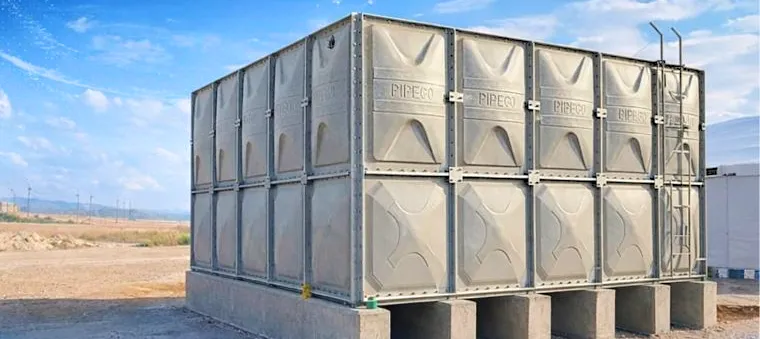
As water depth increases, hydrostatic pressure acting on the tank walls also increases. To maintain structural stability, large FRP water tanks incorporate internal reinforcement systems designed to distribute loads efficiently.
Typical reinforcement components include:
Proper reinforcement design minimizes panel deformation while maintaining dimensional stability throughout the tank's operational life.
Outdoor water tanks are exposed to daily and seasonal temperature variations. Unlike rigid concrete structures, FRP composites exhibit controlled thermal expansion characteristics that help accommodate environmental changes without developing significant internal stresses.
This flexibility improves long-term sealing performance and reduces the likelihood of structural cracking under fluctuating weather conditions.
Initial purchase price represents only a small portion of the total cost of a water storage system. Engineers increasingly evaluate projects based on lifecycle cost (LCC), which considers installation, maintenance, energy consumption, repairs, and replacement over the entire service life.
Compared with conventional steel or concrete tanks, FRP water tanks often provide lower lifecycle costs because they require minimal maintenance, resist corrosion, and maintain stable performance for decades.
Typical lifecycle cost advantages include:
Although FRP water tanks require significantly less maintenance than many traditional storage systems, regular inspections remain essential for maximizing service life.
Recommended maintenance activities include:
Preventive maintenance helps identify potential issues before they develop into costly repairs while ensuring continuous and reliable water storage.
| Challenge | Possible Cause | Recommended Solution |
|---|---|---|
| Water leakage | Loose bolts or damaged sealing gaskets | Retighten connections and replace sealing materials |
| Panel deformation | Insufficient internal reinforcement | Review structural design and reinforcement layout |
| Foundation settlement | Uneven supporting surface | Re-level the foundation before installation |
| Surface discoloration | Long-term UV exposure | Use UV-resistant gel coat or protective outer layer |
| Reduced water quality | Irregular cleaning schedule | Implement routine inspection and cleaning procedures |
As cities continue to expand and infrastructure projects become increasingly complex, engineers require water storage systems that combine durability, flexibility, and cost efficiency.
FRP water tanks meet these evolving requirements through advanced composite materials, modular engineering, and long-term structural reliability. Whether serving residential developments, industrial facilities, hospitals, airports, data centers, desalination plants, or municipal water networks, FRP technology provides an efficient and sustainable solution for modern water storage.
PIPECO is committed to providing high-quality FRP and GRP water tank solutions for customers worldwide. With extensive experience in composite water storage systems, we offer comprehensive support from product selection and engineering consultation to manufacturing, transportation, installation guidance, and after-sales service.
Our modular FRP water tanks are designed for reliable performance, long service life, and compliance with international project requirements, helping customers reduce lifecycle costs while ensuring safe and efficient water storage.
There is essentially no functional difference. "Fiberglass water tank" is the common name, while "FRP water tank" is the engineering term referring to Fiberglass Reinforced Plastic tanks.
Yes. When manufactured with food-grade resin systems and appropriate internal surface finishes, FRP water tanks are suitable for potable water storage.
A properly designed, manufactured, and maintained FRP water tank can typically provide a service life of more than 20 years, depending on operating conditions and maintenance practices.
Yes. One of the key advantages of modular panel construction is that additional panels can often be incorporated to increase storage capacity as project requirements grow.
FRP (Fiberglass Reinforced Plastic) water tanks have become one of the most advanced and reliable water storage solutions available today. Combining lightweight construction, excellent corrosion resistance, modular flexibility, hygienic performance, and long service life, they are well suited for a wide range of residential, commercial, industrial, agricultural, and municipal applications.
Compared with conventional steel or concrete tanks, FRP systems offer significant advantages in installation efficiency, maintenance requirements, lifecycle cost, and adaptability to modern infrastructure projects. As global demand for sustainable and high-performance water storage continues to grow, FRP water tanks are expected to play an increasingly important role in future water management systems.
Experience the brand Trusted by Renowned Companies across the GLOBE.
Pipeco stands at the forefront of the market, recognized as a premier manufacturer, supplier, and exporter specializing in top-tier GRP water tanks, stainless steel water tanks, and FRP Water Tank, Fiberglass Tank, SMC Water Tank committed to delivering unparalleled quality and excellence.
Get In Touch
Email: master@pipeco.cn
Tel: 0086-576-84616026
Address: No.2 Zhaofeng Road, Xinqian Street, Huangyan District, Taizhou City, Zhejiang Province, China