
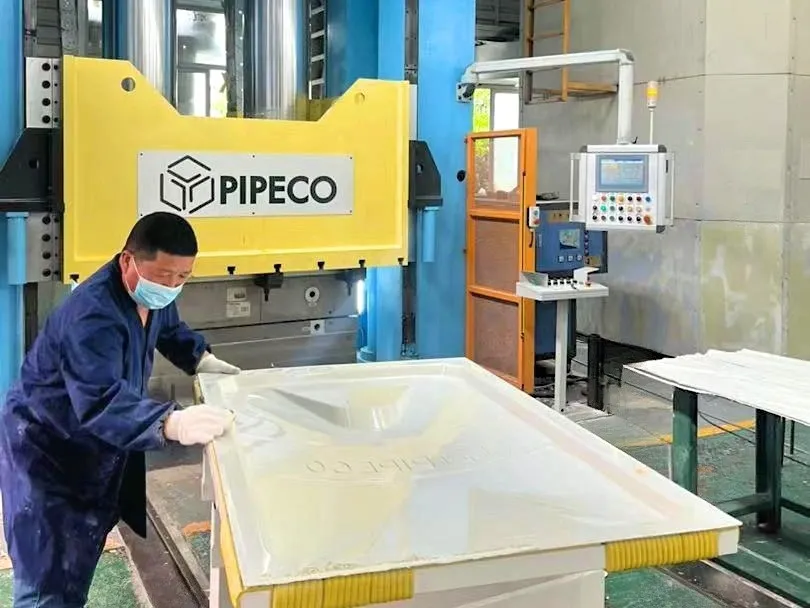
As the world moves toward a low-carbon future, infrastructure development is undergoing a fundamental transformation. Governments, construction companies, and industrial organizations are increasingly focusing on carbon-neutral infrastructure, where every component of a project must contribute to energy efficiency, resource conservation, and reduced environmental impact.
Water storage systems are an essential part of modern infrastructure. From commercial buildings and residential communities to renewable energy facilities and industrial plants, reliable water management directly influences operational efficiency and sustainability performance.
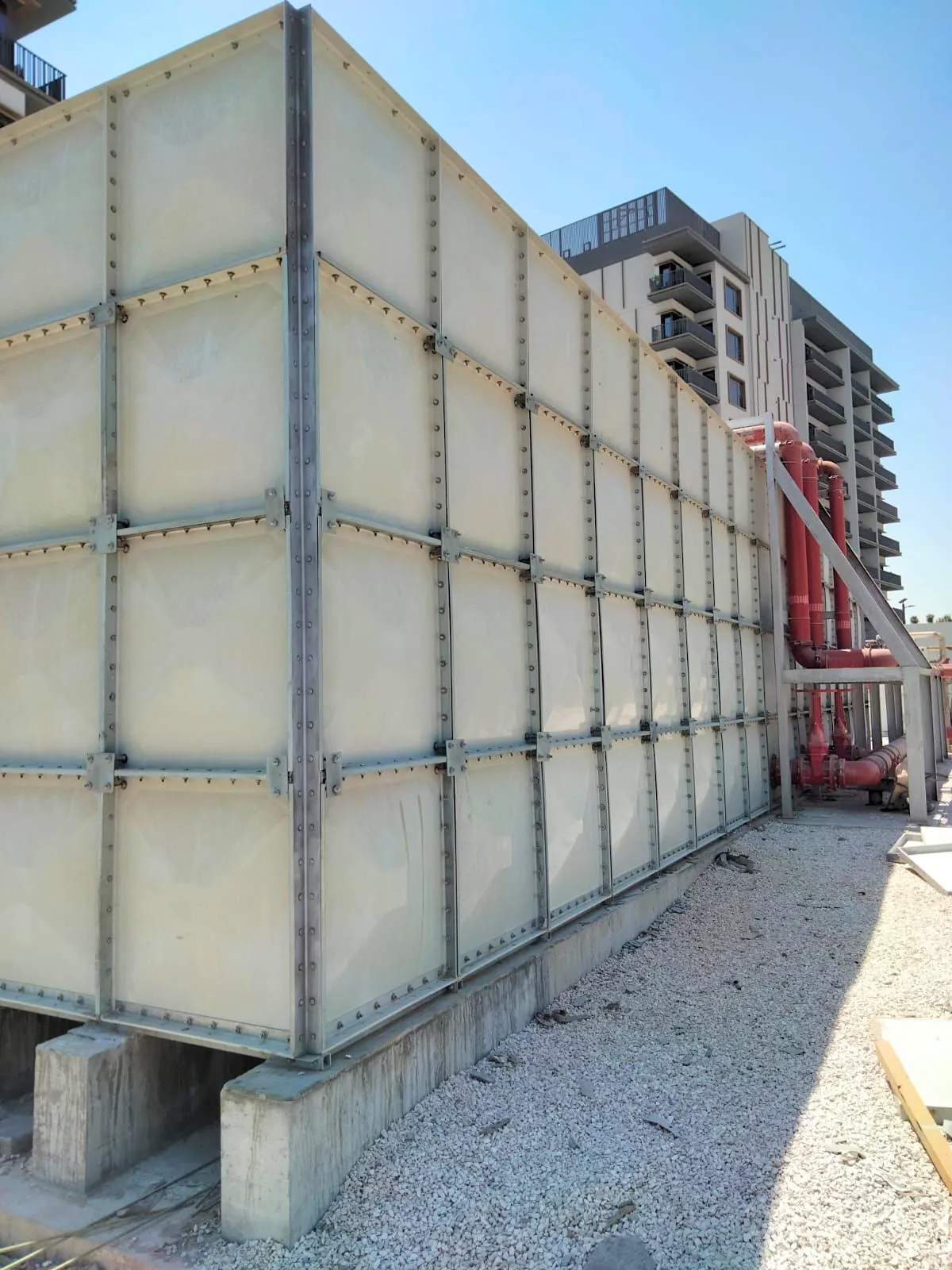
In this transition, FRP water tanks, also known as GRP water tanks or fiberglass water tanks, are becoming an important solution for sustainable water storage. Their lightweight structure, excellent corrosion resistance, long service life, and low maintenance requirements make them highly suitable for green construction and carbon reduction strategies.
Compared with traditional steel or concrete tanks, FRP sectional water tanks can significantly reduce lifecycle environmental impacts by minimizing transportation requirements, maintenance activities, replacement frequency, and resource consumption.
As global industries adopt ESG principles and sustainable development goals, the role of advanced composite materials in infrastructure continues to expand. FRP water storage technology represents a practical approach to achieving reliable water supply while supporting environmental responsibility.
Carbon-neutral infrastructure is not only about reducing direct carbon emissions from energy consumption. It also considers the entire lifecycle impact of construction materials, including manufacturing, transportation, installation, operation, maintenance, and end-of-life management.
Traditional water storage systems often require large amounts of raw materials, heavy transportation equipment, protective coatings, and frequent maintenance. These factors can increase the overall carbon footprint of infrastructure projects.
A sustainable water storage solution should achieve several key objectives:
FRP water tanks meet these requirements by combining advanced composite technology with practical engineering performance. This makes them increasingly popular in sustainable buildings, renewable energy infrastructure, municipal projects, and industrial water management systems.
FRP (Fiber Reinforced Plastic) is a composite material manufactured by combining high-strength glass fibers with polymer resin. This structure provides excellent mechanical performance while maintaining a lightweight design.
The unique characteristics of FRP materials allow water tanks to achieve a balance between durability, environmental performance, and operational efficiency.
One of the most important advantages of fiberglass water tanks is their high strength-to-weight ratio. Compared with traditional concrete tanks, FRP tanks provide similar structural reliability with significantly lower weight.
The lightweight design reduces:
For large infrastructure projects, these advantages can create measurable environmental benefits during the construction phase.
Corrosion is one of the major challenges affecting traditional water storage systems. Steel tanks often require protective coatings and regular maintenance to prevent rust and structural deterioration.
FRP water tanks naturally resist corrosion caused by:
Because FRP tanks do not rely on continuous anti-corrosion treatments, they help reduce maintenance materials, labor requirements, and environmental impact throughout their service life.
When evaluating sustainable infrastructure materials, it is important to consider not only the manufacturing stage but the complete product lifecycle. A truly sustainable water storage solution should minimize environmental impact from production and transportation to operation, maintenance, and replacement.
FRP water tanks contribute to carbon reduction through multiple lifecycle advantages, making them an effective choice for low-carbon construction projects, green buildings, and sustainable infrastructure development.
Transportation is an important source of carbon emissions during infrastructure construction. Heavy construction materials such as concrete and steel require large transportation capacity, specialized vehicles, and additional fuel consumption.
Because FRP tanks are manufactured using lightweight composite materials, their overall weight is significantly lower than many traditional storage systems. This provides several environmental advantages:
For projects such as renewable energy facilities, rural water supply systems, and remote industrial sites, the lightweight characteristics of fiberglass water tanks can significantly improve construction efficiency while reducing carbon emissions.
The environmental impact of infrastructure materials is strongly influenced by service life. Materials that require frequent replacement create additional consumption of raw materials, manufacturing energy, transportation resources, and construction labor.
High-quality GRP water tanks are designed for long-term operation with excellent resistance against corrosion, weather exposure, and chemical environments.
A longer service life means:
This lifecycle advantage makes FRP water storage systems particularly suitable for infrastructure projects that require decades of reliable operation.
Traditional steel water tanks often require painting, galvanizing, or other protective coatings to prevent corrosion. These treatments not only increase maintenance costs but also introduce additional material consumption and chemical usage.
FRP water tanks naturally provide corrosion resistance because the composite structure does not rust like conventional steel.
This eliminates or greatly reduces the need for:
As a result, FRP tanks support cleaner and more sustainable operation throughout their entire lifecycle.
Maintenance activities create hidden environmental costs. Every repair operation requires transportation, manpower, replacement materials, and energy consumption.
Due to their durable composite structure, fiberglass water tanks typically require minimal maintenance compared with many traditional water storage solutions.
The advantages include:
For large-scale infrastructure such as hospitals, schools, industrial parks, and municipal water systems, reducing maintenance demand can significantly improve long-term sustainability performance.
Modern carbon-neutral buildings focus on reducing energy consumption across all systems, including heating, cooling, and water management.
FRP water tanks can support energy-efficient infrastructure through:
By improving water management efficiency, FRP storage solutions contribute to the overall performance of sustainable buildings and smart infrastructure.
The development of green buildings requires every building component to support environmental goals. Water storage systems are no exception.
Modern sustainable buildings increasingly integrate:
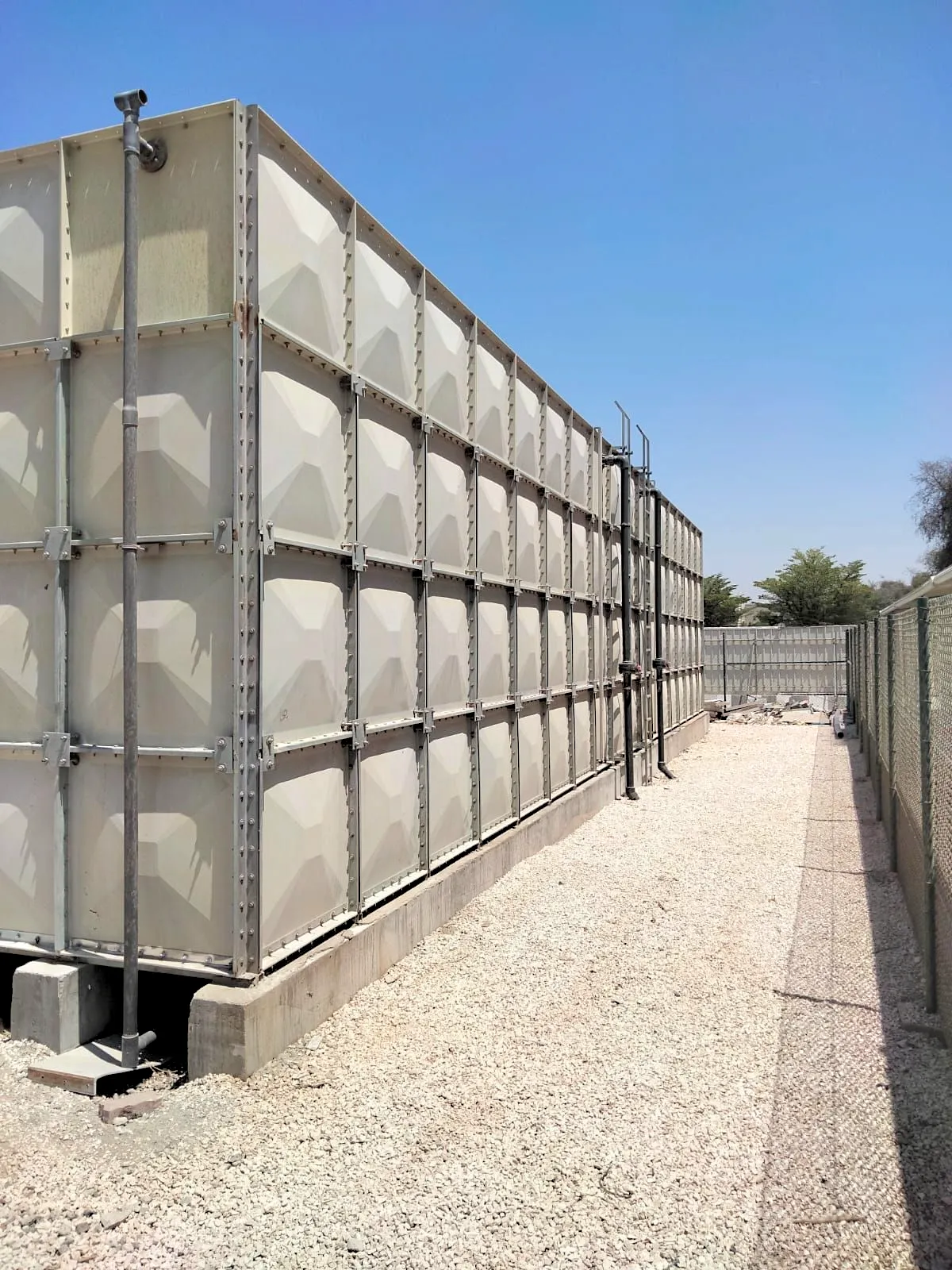
GRP sectional water tanks are widely used in these applications because they provide flexible capacity, easy installation, and reliable long-term performance.
Their modular panel structure allows engineers to customize tank capacity according to different building requirements, making them suitable for:
By combining efficient water management with sustainable material technology, FRP tanks help buildings achieve higher environmental performance standards.
Choosing the right water storage material is essential for achieving sustainable infrastructure goals. The following comparison highlights why FRP tanks are increasingly selected for modern projects.
| Feature | FRP Water Tank | Steel Water Tank | Concrete Water Tank |
|---|---|---|---|
| Weight | Lightweight composite structure | Heavy metal structure | Very heavy construction |
| Corrosion Resistance | Excellent natural resistance | Requires protection treatment | Possible cracking and water leakage risks |
| Installation | Fast modular assembly | Requires more site preparation | Complex construction process |
| Maintenance Requirement | Very low maintenance | Regular inspection and coating required | Repair may be required over time |
| Transportation Impact | Lower logistics emissions | Higher transportation demand | High transportation energy consumption |
| Service Life | Long-term reliable operation | Affected by corrosion conditions | Affected by structural aging |
| Sustainability Performance | Excellent lifecycle efficiency | Moderate | Lower flexibility for sustainable projects |
For projects focused on carbon reduction, lifecycle efficiency, and sustainable operation, FRP water tanks provide a balanced solution combining engineering reliability with environmental responsibility.
As global infrastructure moves toward carbon neutrality, reliable and sustainable water storage systems are becoming increasingly important. FRP water tanks are widely applied in projects where durability, environmental performance, and operational reliability are essential.
From renewable energy facilities to smart cities and industrial developments, GRP water tanks provide flexible water storage solutions that support sustainable resource management.
Renewable energy projects often operate in locations where reliable water management is critical. Solar power plants, wind farms, hydrogen facilities, and energy storage sites require dependable water systems for operational processes, cleaning, cooling, and facility management.
Compared with traditional water storage materials, fiberglass water tanks provide several advantages for renewable energy infrastructure:
Because renewable energy projects are designed for long operational lifetimes, selecting durable supporting infrastructure such as FRP storage tanks helps maximize overall sustainability performance.
Solar farms are often constructed in areas with high temperatures, strong sunlight, dust, and limited access to maintenance resources. These conditions require water storage systems that can operate reliably with minimal intervention.
FRP water tanks are suitable for solar facilities because they provide:
Applications include:
Industrial facilities are increasingly adopting sustainable manufacturing strategies to reduce energy consumption, optimize resource usage, and achieve ESG targets.
Reliable industrial water management plays an important role in this process. FRP industrial water tanks are commonly used for:
The chemical resistance of FRP materials makes them suitable for demanding industrial environments where conventional materials may experience corrosion problems.
Water conservation is a key element of carbon-neutral infrastructure. As climate change increases pressure on global water resources, many buildings and communities are adopting rainwater harvesting systems to reduce dependence on traditional water sources.
A complete rainwater harvesting system usually includes:
FRP rainwater harvesting tanks provide an efficient storage solution because they combine durability, hygiene, and flexible installation.
By supporting rainwater reuse, FRP tanks help reduce freshwater consumption and contribute to sustainable urban water management.
The traditional approach to water management focuses mainly on supply and disposal. However, sustainable infrastructure is moving toward a circular water economy where water resources are reused, recycled, and managed efficiently.
FRP water tanks support this transition by providing reliable storage for different water circulation systems, including:
A circular water economy reduces pressure on natural water resources and improves the sustainability performance of communities and industries.
Because FRP tanks offer long service life and low maintenance requirements, they align with the principles of resource efficiency and responsible infrastructure development.
Smart cities require infrastructure systems that are efficient, resilient, and environmentally responsible. Water management is one of the most important components of smart urban development.
Modern urban projects increasingly integrate:
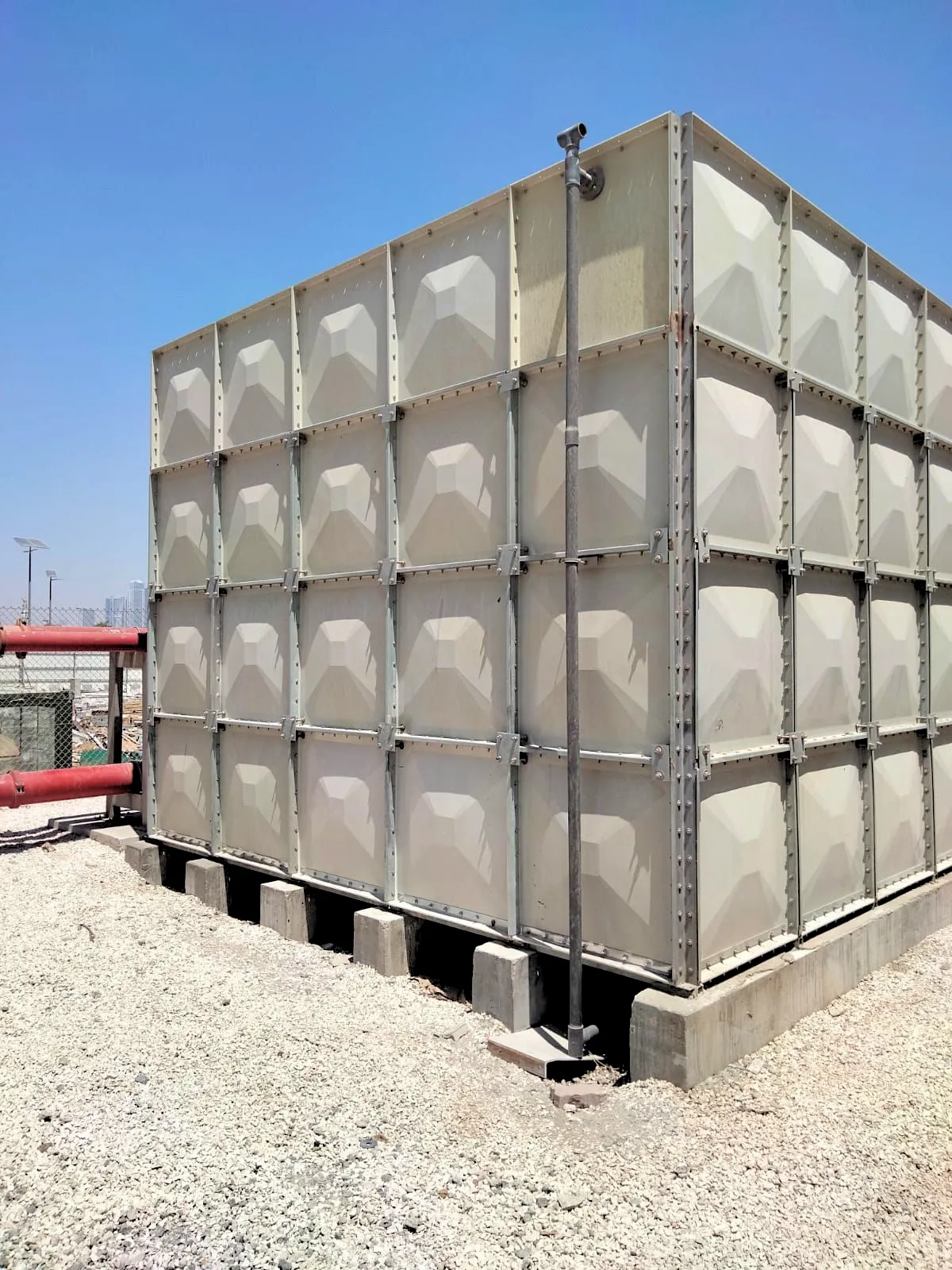
FRP sectional water tanks are suitable for smart city applications because their modular design allows flexible capacity expansion and efficient installation.
Typical applications include:
By combining advanced materials with intelligent water management technologies, FRP tanks contribute to the development of resilient and sustainable cities.
Selecting the right FRP water tank manufacturer is a critical decision for sustainable infrastructure projects. A high-quality water storage system must provide long-term reliability, structural safety, water hygiene performance, and consistent manufacturing quality.
With increasing demand for green buildings, renewable energy projects, and sustainable water management systems, customers should evaluate manufacturers based on engineering capability, production experience, quality control, and customization ability.
FRP water tanks require professional knowledge of composite materials, molding technology, structural design, and quality control processes.
An experienced manufacturer should understand:
Professional manufacturing experience ensures that each tank can maintain reliable performance under different applications, including municipal water supply, industrial storage, commercial buildings, and renewable energy projects.
The performance of an FRP water tank depends greatly on manufacturing accuracy and process control.
A professional GRP water tank supplier should maintain strict control over:
Stable manufacturing processes help ensure that every FRP sectional water tank delivers consistent mechanical strength, water tightness, and long service life.
Every infrastructure project has different requirements regarding capacity, installation environment, and water usage conditions.
A reliable FRP tank manufacturer should provide customized solutions including:
This flexibility allows FRP water tanks to be integrated into various applications, from small commercial buildings to large-scale infrastructure projects.
For drinking water applications and critical infrastructure projects, quality assurance is essential.
A professional manufacturer should focus on:
High-quality control systems help ensure that FRP water tanks meet the requirements of global customers and long-term infrastructure applications.
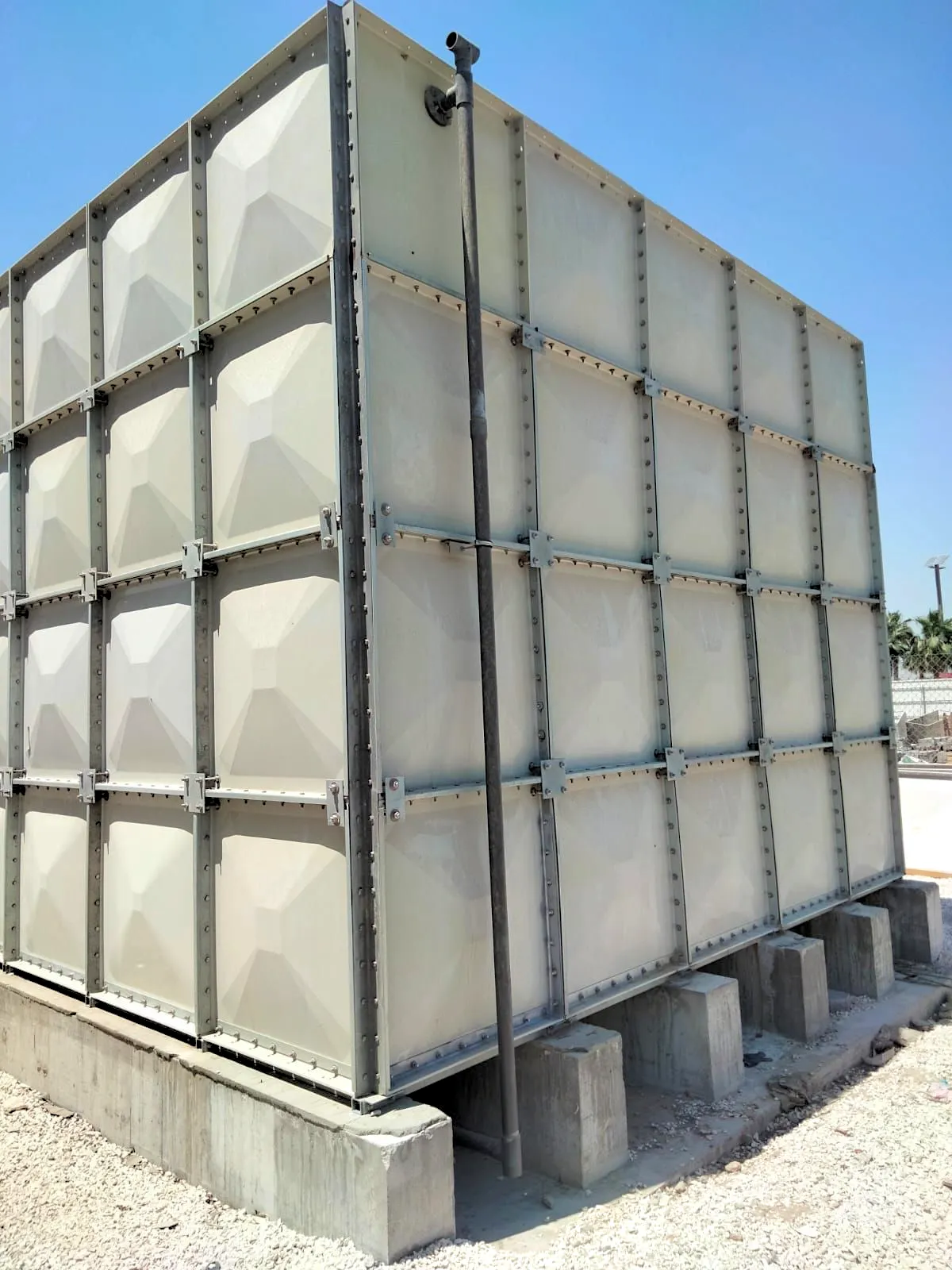
Pipeco focuses on providing reliable FRP water tank solutions designed for modern sustainable infrastructure. By combining composite material technology with practical engineering experience, Pipeco helps customers achieve efficient and environmentally responsible water storage systems.
Our FRP water tanks are developed to support applications where durability, low maintenance, and lifecycle efficiency are essential.
FRP composite materials provide excellent strength while maintaining a lightweight structure. This helps reduce transportation impact, simplify installation, and improve overall project efficiency.
The combination of durability and low maintenance makes FRP tanks a suitable choice for projects seeking long-term environmental benefits.
Water storage systems must provide stable performance throughout many years of operation. Pipeco FRP tanks are designed with:
These characteristics make them suitable for:
As countries and companies continue implementing carbon reduction strategies, infrastructure suppliers play an increasingly important role in achieving sustainability goals.
By providing durable and efficient FRP water storage solutions, Pipeco contributes to:
The future of infrastructure will require solutions that balance environmental responsibility, economic efficiency, and reliable performance.
FRP water tanks represent this balance by offering:
As the global transition toward carbon-neutral infrastructure continues, FRP water storage technology will play an increasingly important role in supporting green buildings, renewable energy projects, smart cities, and sustainable industrial development.
An FRP water tank is a water storage tank manufactured using fiber reinforced plastic composite materials. It combines glass fiber reinforcement with resin technology to provide high strength, corrosion resistance, lightweight construction, and long service life.
FRP water tanks are considered sustainable because they reduce lifecycle environmental impact through lightweight transportation, low maintenance requirements, corrosion resistance, and long operational lifespan. These advantages help reduce resource consumption and carbon emissions throughout the product lifecycle.
FRP water tanks support carbon-neutral infrastructure by reducing transportation emissions, minimizing maintenance requirements, extending replacement cycles, and improving water management efficiency in sustainable buildings, industrial facilities, and renewable energy projects.
FRP water tanks provide advantages over steel tanks in many applications because they naturally resist corrosion, require less maintenance, and have lower lifecycle environmental costs. Steel tanks usually require protective coatings and regular maintenance to prevent rust.
A high-quality FRP water tank can provide long-term reliable operation when properly designed, manufactured, and installed. Its corrosion resistance and durable composite structure allow it to perform effectively in commercial, industrial, and municipal applications.
Yes. FRP water tanks can be designed for potable water storage applications when manufactured using suitable materials and production processes that meet drinking water safety requirements.
Yes. GRP sectional water tanks are widely used in green buildings because they provide flexible capacity, efficient installation, low maintenance, and reliable water storage performance.
Yes. FRP tanks are suitable for rainwater harvesting systems because they provide durable storage, corrosion resistance, and reliable performance for water collection and reuse applications.
FRP water tanks are used in many industries including construction, renewable energy, municipal water supply, wastewater treatment, manufacturing facilities, hospitals, schools, and commercial buildings.
A reliable FRP water tank manufacturer should have strong composite material expertise, advanced production technology, strict quality control, customization capability, and experience supporting international infrastructure projects.
Pipeco provides durable FRP water storage solutions designed for sustainable infrastructure applications. With professional manufacturing capability and customized solutions, Pipeco supports customers worldwide with reliable GRP and fiberglass water tank systems.
Experience the brand Trusted by Renowned Companies across the GLOBE.
Pipeco stands at the forefront of the market, recognized as a premier manufacturer, supplier, and exporter specializing in top-tier GRP water tanks, stainless steel water tanks, and FRP Water Tank, Fiberglass Tank, SMC Water Tank committed to delivering unparalleled quality and excellence.
Get In Touch
Email: master@pipeco.cn
Tel: 0086-576-84616026
Address: No.2 Zhaofeng Road, Xinqian Street, Huangyan District, Taizhou City, Zhejiang Province, China