
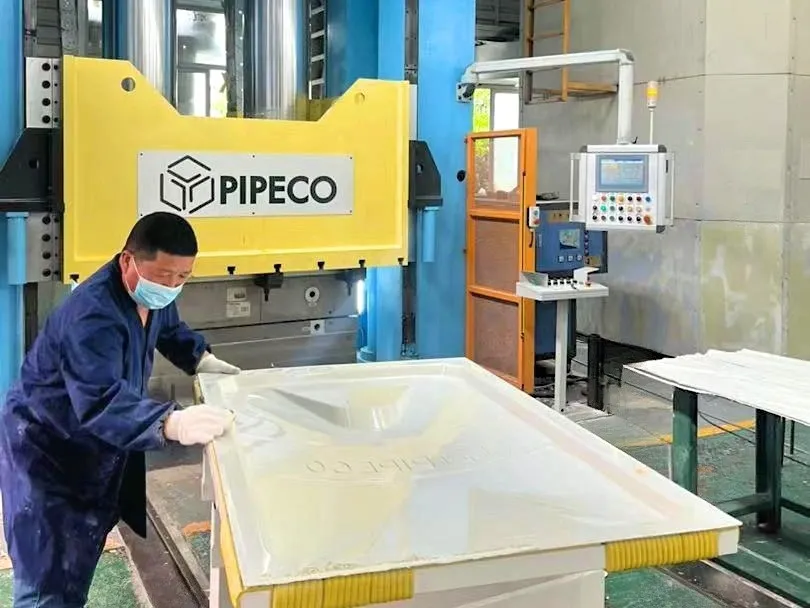
In modern construction and infrastructure projects, GRP Water Tank and SMC Water Tank systems have become the preferred solution for reliable water storage due to their lightweight structure, corrosion resistance, and long service life. Whether referred to as a FRP Water Tank, Fiberglass Tank, or GRP Sectional Tank, these modular systems are widely used in high-rise buildings, commercial complexes, and rooftop installations.
However, ensuring the long-term performance of a GRP Square Shape Tank or SMC Water Tank depends not only on material quality but also on precise installation practices. Among all factors, concrete foundation leveling and panel bolt tightening techniques play a decisive role in preventing leakage and maintaining structural integrity.
A GRP Water Tank (Glass Reinforced Plastic Water Tank), also known as a FRP Water Tank or Fiberglass Tank, is manufactured using advanced composite materials. Similarly, the SMC Water Tank is produced through compression molding technology, offering enhanced strength and dimensional stability.
These tanks are typically designed as GRP Sectional Tank systems, allowing flexible modular assembly. The GRP Square Shape Tank configuration is especially popular due to its efficient use of installation space.
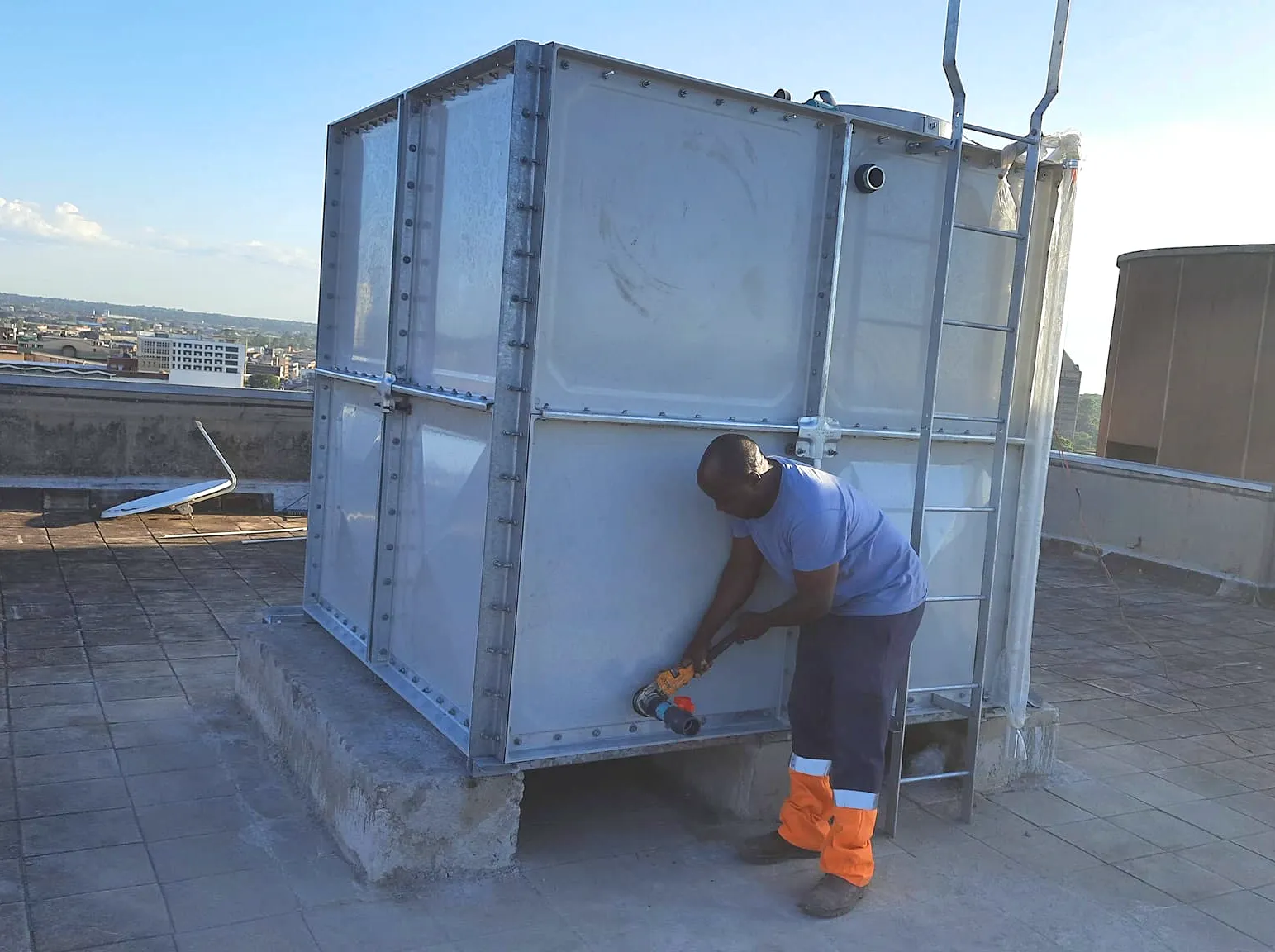
The foundation is the most critical structural element for any GRP Water Tank or SMC Water Tank. In rooftop or elevated applications, improper foundation preparation can directly lead to leakage, deformation, and reduced service life.
The concrete base must support the full weight of the FRP Water Tank, including:
For any GRP Square Shape Tank or SMC Water Tank, foundation flatness directly affects sealing performance.
Uneven foundations can cause:
Recommended tolerance:
Precision tools such as laser leveling systems and self-leveling mortar are recommended to achieve optimal installation results for both GRP Water Tank and SMC Water Tank systems.
The GRP Sectional Tank and SMC Water Tank are assembled panel by panel, making them ideal for confined or elevated installation environments.
During assembly, maintaining alignment is essential for ensuring the integrity of the Fiberglass Tank.
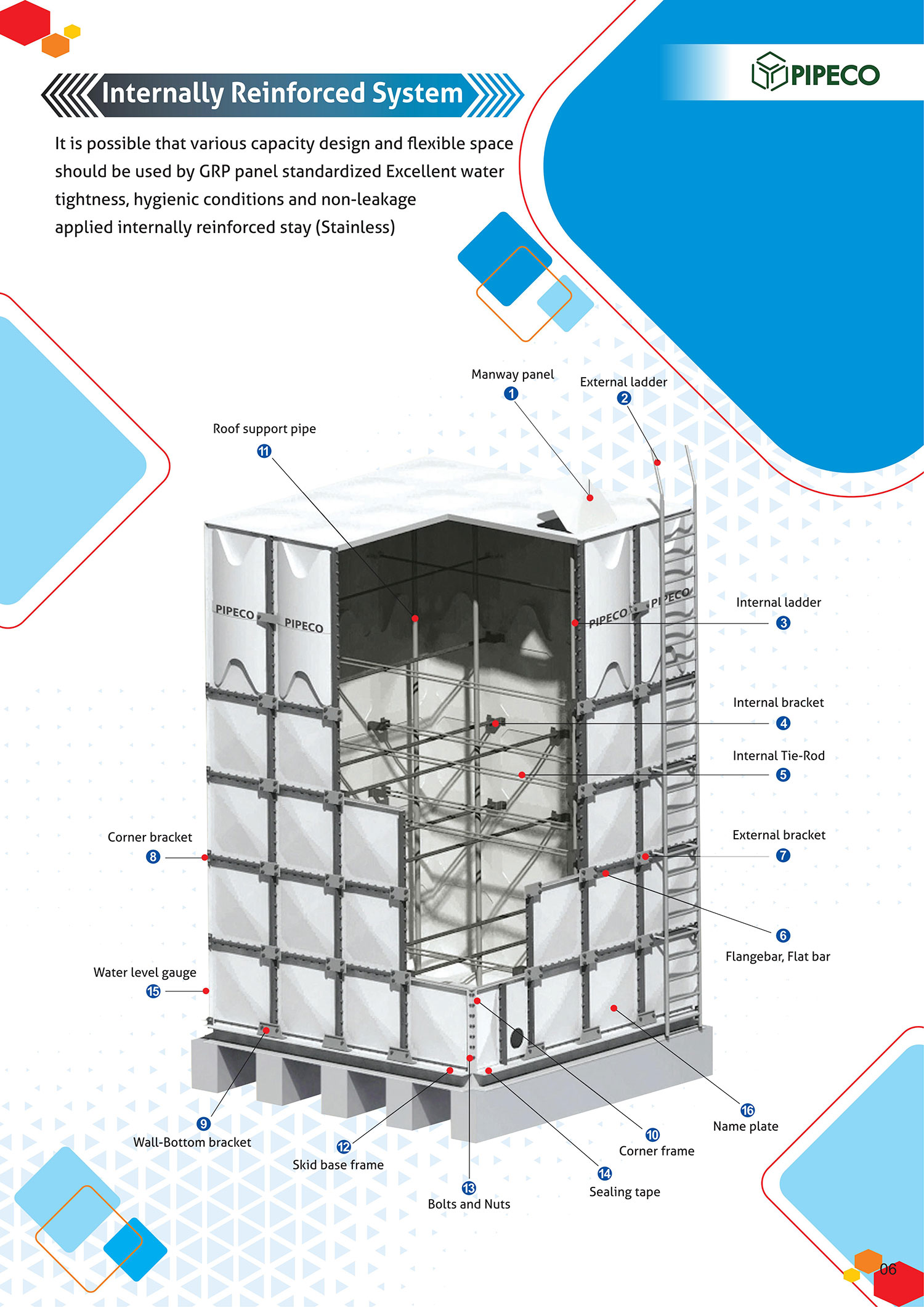
In both GRP Water Tank and SMC Water Tank systems, the bolt connection system determines the sealing reliability of the entire structure.
A cross-diagonal tightening sequence is recommended to ensure uniform pressure distribution across the panels of the GRP Sectional Tank.
Proper torque ensures that the sealing gaskets in the GRP Square Shape Tank are evenly compressed.
The sealing system is essential for maintaining the watertight performance of any Fiberglass Tank, including FRP Water Tank and SMC Water Tank.
Installing a GRP Water Tank or SMC Water Tank on rooftops requires additional engineering considerations:
These factors are particularly important for large-capacity GRP Sectional Tank systems installed at height.
After installation, every GRP Square Shape Tank or SMC Water Tank must undergo strict inspection:
Gradual filling is recommended to monitor the structural behavior of the GRP Water Tank under load.
Whether it is a GRP Water Tank, FRP Water Tank, GRP Sectional Tank, GRP Square Shape Tank, Fiberglass Tank, or SMC Water Tank, the success of the system depends on precision engineering and installation.
Among all installation steps, foundation leveling and bolt tightening techniques are the most critical factors in preventing leakage and ensuring durability.
By following strict standards and best practices, project engineers can maximize the performance, safety, and lifespan of modular composite water tank systems in even the most demanding environments.
Experience the brand Trusted by Renowned Companies across the GLOBE.
Pipeco stands at the forefront of the market, recognized as a premier manufacturer, supplier, and exporter specializing in top-tier GRP water tanks, stainless steel water tanks, and FRP Water Tank, Fiberglass Tank, SMC Water Tank committed to delivering unparalleled quality and excellence.
Get In Touch
Email: master@pipeco.cn
Tel: 0086-576-84616026
Address: No.2 Zhaofeng Road, Xinqian Street, Huangyan District, Taizhou City, Zhejiang Province, China