Quick Answer:
In 2026, global procurement strategies for GRP water tanks will be strongly influenced by fluctuations in glass fiber and resin raw material prices. Glass fiber prices are expected to remain relatively stable with cyclical variations, while resin markets may experience higher volatility due to petrochemical supply risks. Procurement managers can reduce costs by analyzing supply-demand gaps and optimizing purchasing timing.
As infrastructure development and water storage demand increase worldwide, GRP water tanks, FRP water tanks, and fiberglass tanks are becoming essential solutions for municipal water supply, commercial buildings, industrial water storage, and fire protection systems.
The global market for Glass Reinforced Plastic (GRP) products continues to expand as industries pursue corrosion-resistant, lightweight, and long-life water storage solutions. Compared with traditional steel or concrete tanks, GRP sectional water tanks offer superior durability, modular installation, and reduced maintenance costs.
Key industries driving demand include:
With these industries expanding globally, demand for fiberglass water tanks and FRP water storage systems is expected to continue increasing throughout 2026 and beyond.
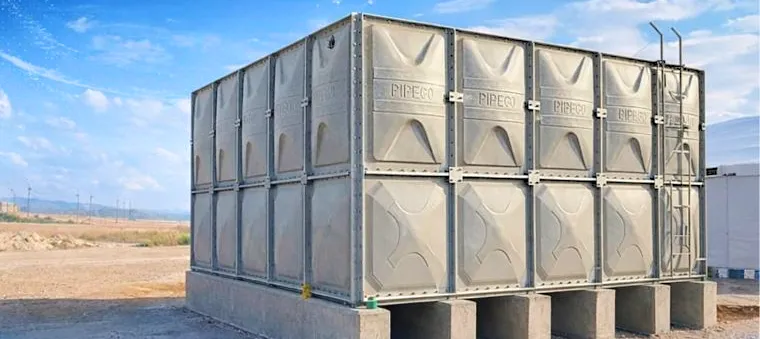
Glass fiber is the primary reinforcement material used in manufacturing GRP water tanks. Its price trend has a direct impact on the overall production cost of fiberglass tanks.
In recent years, glass fiber markets have shown relatively stable pricing patterns with moderate fluctuations. This stability is largely due to increased global production capacity and improved supply chain efficiency.
For procurement managers sourcing GRP sectional tanks, monitoring glass fiber production capacity and inventory cycles can provide valuable opportunities to secure more competitive purchasing prices.
Unlike glass fiber, resin materials used in FRP tank manufacturing are more sensitive to fluctuations in the petrochemical industry. Most GRP tanks are produced using unsaturated polyester resin, which is derived from oil-based feedstocks.
This makes resin pricing highly influenced by:
As a result, resin prices may experience sharper short-term volatility compared with glass fiber.
For manufacturers of fiberglass water tanks, resin cost variations can significantly affect production budgets and project quotations.
Understanding supply-demand dynamics is essential for optimizing procurement strategies for GRP water tank systems.
These dynamics create a mixed market environment in which procurement teams must carefully analyze price cycles before placing large orders.
Understanding the cost composition of a GRP water tank helps procurement teams evaluate price risks more effectively.
Because raw materials represent over 60% of total production costs, even moderate fluctuations in glass fiber or resin prices can influence final pricing for fiberglass tanks.

For international buyers and procurement managers, building a resilient supply chain is essential for controlling costs and ensuring project delivery.
Suppliers specializing in GRP sectional water tanks and FRP water storage systems often provide better cost stability due to optimized manufacturing processes and large-scale production capacity.
Looking ahead, the GRP water tank industry is expected to continue expanding as global demand for reliable water storage solutions increases.
Key trends shaping the future market include:
As procurement teams become more data-driven, companies that understand raw material price cycles will gain a significant competitive advantage in the global fiberglass water tank market.
GRP water tanks are typically manufactured using glass fiber reinforcement combined with unsaturated polyester resin. This composite structure provides high strength, corrosion resistance, and long service life.
Resin materials are derived from petrochemical feedstocks such as crude oil and naphtha, making them more sensitive to global energy markets and geopolitical disruptions.
Buyers can reduce costs by monitoring raw material price trends, diversifying suppliers, and placing orders during favorable supply-demand cycles.
GRP sectional tanks offer excellent corrosion resistance, modular installation, lightweight structure, and long service life, making them ideal for commercial buildings, industrial facilities, and municipal water systems.
About PIPECO
PIPECO specializes in manufacturing high-quality GRP water tanks, FRP water tanks, and fiberglass sectional tanks for global water storage applications. Our modular tank systems are widely used in municipal infrastructure, industrial projects, and commercial buildings worldwide.
Experience the brand Trusted by Renowned Companies across the GLOBE.
Pipeco stands at the forefront of the market, recognized as a premier manufacturer, supplier, and exporter specializing in top-tier GRP water tanks, stainless steel water tanks, and FRP Water Tank, Fiberglass Tank, SMC Water Tank committed to delivering unparalleled quality and excellence.
Get In Touch
Email: master@pipeco.cn
Tel: 0086-576-84616026
Address: No.2 Zhaofeng Road, Xinqian Street, Huangyan District, Taizhou City, Zhejiang Province, China