FRP Water Tank Freeze Protection: Insulation and Heating Design Guide
Comprehensive technical guide for winter freeze protection of FRP/GRP water tanks: insulation materials, heating systems, engineering design, monitoring and maintenance for northern cold climates.
Technical guide for designers, installers and facility managers: practical, engineering-focused strategies to keep FRP/GRP/fiberglass water tanks operational and damage-free in northern low-temperature environments.
Overview — Why Freeze Protection Matters for FRP Water Tanks
FRP (fiberglass/GRP) water tanks are widely used for potable water, fire reserves, process water and irrigation. In climates that experience prolonged sub-zero temperatures, freeze events can lead to panel deformation, sealant failure, nozzle/pipe blockages and operational outages. Proper thermal design—combining insulation, active heating and system controls—prevents ice formation and protects tank integrity.
1. Freeze Mechanisms & Risks
Water expands ~9% on freezing; ice forms first at cold spots (corners, joints, nozzles). FRP sectional tanks are vulnerable at panel joints, sealants and inserts. Common failure modes:
Sealant cracking and leakage
Localized panel bulging or delamination
Piping and valve blockage
Reduced usable capacity and supply interruptions
2. Insulation Materials & Application Methods
Effective insulation reduces heat loss and lowers required heater capacity. Key insulation options:
Material
Advantages
Typical Uses
Polyurethane (PU) foam
High R-value, lightweight, seamless spray or prefabricated panels
Shell and top cover insulation for sectional tanks
Extruded Polystyrene (XPS)
High compressive strength, moisture-resistant
Underground or base insulation
Rock wool / mineral wool
Non-combustible, good thermal & acoustic
Industrial tank housings and enclosed rooms
Multi-layer reflective insulation
Thin, retrofit-friendly
Limited-space retrofits and hatch covers
Application best practices:
Apply insulation to side panels, top cover and base as required.
Design continuous thermal envelope at joints and penetrations.
Protect insulation with weatherproof cladding (aluminum or FRP facings) to prevent moisture ingress.
Ensure insulation is compatible with FRP adhesives and sealants—avoid trapped moisture.
3. Heating System Options & Design
When ambient conditions exceed insulation capability, integrate an active heating system. Common, proven solutions include:
3.1 Self-Regulating Electric Heating Cables
Flexible, self-regulating heating tapes automatically vary heat output by ambient temperature. Install along perimeter, around nozzles, on inlet/outlet lines and under base plates. Advantages: low maintenance, localized heating, simple control via thermostats.
3.2 Stainless-Steel Immersion Heaters
Immersion elements (3–15 kW+) provide direct bulk-water heating for medium and large tanks. Use thermostatic control, over-temperature cutouts and corrosion-resistant mounting flanges compatible with FRP liners.
3.3 Hot-Water Recirculation Systems
Closed-loop hot water circulation is ideal for large-volume or fire reserve tanks. Integrate a boiler or heat source, circulation pumps, and plate heat exchangers for uniform temperature distribution.
3.4 Air-Source Heat Pumps
Low-temperature air-source heat pumps offer higher efficiency (COP 2–4) to supply warmed water or heated air to tank enclosures—best for sites with energy efficiency goals.
3.5 Hybrid & Redundant Designs
Combine insulation + electric cable + immersion heater for redundancy. Include backup power (generator or UPS) to maintain heating during utility outages—critical for firefighting reserve tanks.
4. Controls, Sensors & Monitoring
Automated control and monitoring reduce energy use and prevent failures:
Distributed temperature sensors (top, mid, bottom, near nozzles)
Thermostats with hysteresis to avoid frequent cycling
Remote telemetry (SCADA/BMS) with alerts for low temp, cable faults, loss of power
Flow and pressure sensors on circulation systems
Leak detection under insulation layers where practical
5. Engineering & Installation Considerations
Foundation thermal break: insulate base to minimize conductive heat loss into the ground.
Wind and exposure: install windbreaks or enclosures for tanks exposed to prevailing winds.
Penetrations and nozzles: use pre-insulated flanges and heated collars to avoid ice blockage.
Compatibility: verify heating elements and adhesives are compatible with FRP chemistry and mounting points.
Fire safety: follow local codes—keep heating elements and electrical wiring installed per standards and use non-combustible cladding where required.
6. Winter Maintenance & Operational Checklist
Routine checks keep systems reliable through prolonged cold:
Weekly visual inspection of heating cables and external cladding
Monthly sensor calibration and thermostat verification
Quarterly leak testing and inspection of sealants and panel joints
Maintain minimum operational fill level (recommend ≥60% for freeze risk reduction)
Test backup power and perform simulated outage drills
Flush lines and keep valves exercised to prevent ice binding
7. Typical Design Examples & Sizing Guidance
Example guidance (general starting points—perform project-specific heat-loss calculations):
Small rooftop GRP tank (1–5 m³): 10–30 W/m² insulation + 30–100 W electric heating cable looped at inlet/outlet.
Medium fire reserve tank (10–50 m³): closed-loop hot-water recirculation with 1–3 kW immersion backup; PU foam insulation 50–100 mm.
Large underground/semi-buried tanks: insulated base with XPS; moderate heating only for external piping and access hatches.
Note: perform a detailed U-value heat-loss calculation for accurate heater sizing—consider ambient design temperature, wind, solar gains and usage patterns.
Conclusion
Freeze prevention for FRP/GRP water tanks requires an integrated approach: high-performance insulation, correctly sized and controlled heating systems, robust installation details at penetrations, and disciplined maintenance. For mission-critical tanks (fire reserves, municipal systems, industrial process water), include redundancy and remote monitoring to guarantee continuous operation through extreme winters.
If you need a project-specific design, thermal calculation, or turnkey supply (insulation + heating + controls) for GRP/FRP water tanks, contact our engineering team for a feasibility assessment and quotation.
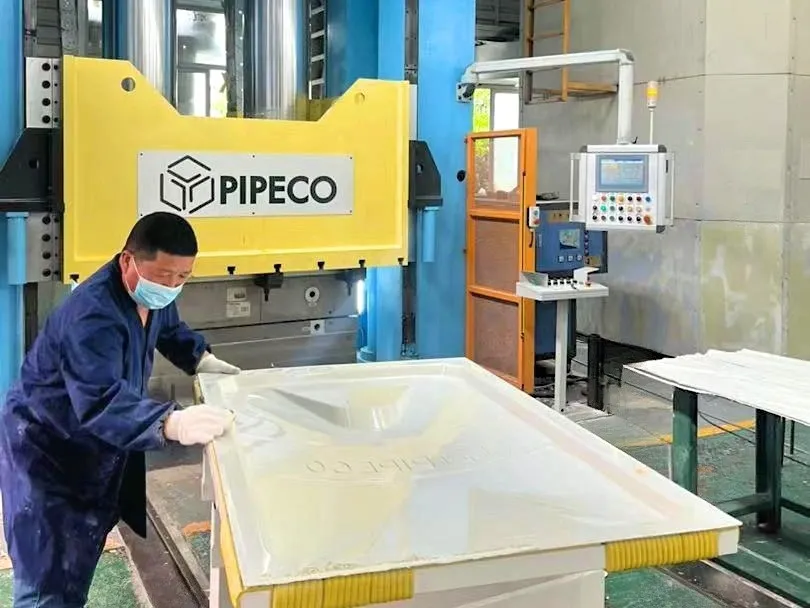
Pipeco stands at the forefront of the market, recognized as a premier manufacturer, supplier, and exporter specializing in top-tier GRP water tanks, stainless steel water tanks, and FRP Water Tank, Fiberglass Tank, SMC Water Tank committed to delivering unparalleled quality and excellence.