
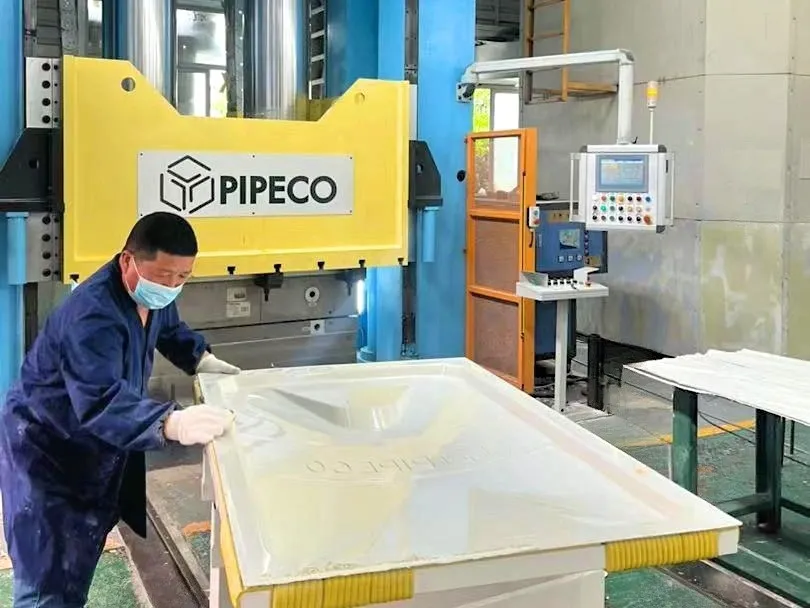
Choosing the right water storage tank is one of the most important decisions in any water infrastructure project. Whether the application involves municipal water supply, commercial buildings, industrial facilities, agricultural irrigation, mining operations, or residential developments, the performance of the storage tank directly affects reliability, operating costs, maintenance requirements, and long-term project success.
Among today's most widely used water storage materials, Fiberglass Reinforced Plastic (FRP) and High-Density Polyethylene (HDPE) represent two very different engineering approaches. Although both materials offer corrosion resistance and are widely used for water storage, their structural characteristics, manufacturing methods, installation requirements, and ideal applications differ considerably.
This engineering guide compares FRP water tanks and HDPE water tanks from multiple technical perspectives, including structural strength, durability, UV resistance, thermal performance, transportation, installation, lifecycle cost, and application suitability. The goal is to help engineers, contractors, consultants, distributors, and project owners select the most appropriate solution based on actual project requirements rather than simply comparing initial purchase prices.
Selecting the right tank material involves much more than choosing between two products. Every water storage system must perform reliably throughout years—or even decades—of operation while exposed to environmental conditions, structural loading, and varying water demand.
An inappropriate material choice may result in higher maintenance costs, reduced service life, transportation difficulties, structural limitations, or unnecessary replacement expenses. Conversely, selecting a material that matches the project's technical requirements can improve operational efficiency, reduce lifecycle costs, and simplify future expansion.
Rather than asking which material is universally "better," engineers typically evaluate which material is better suited for a particular project environment and operating condition.
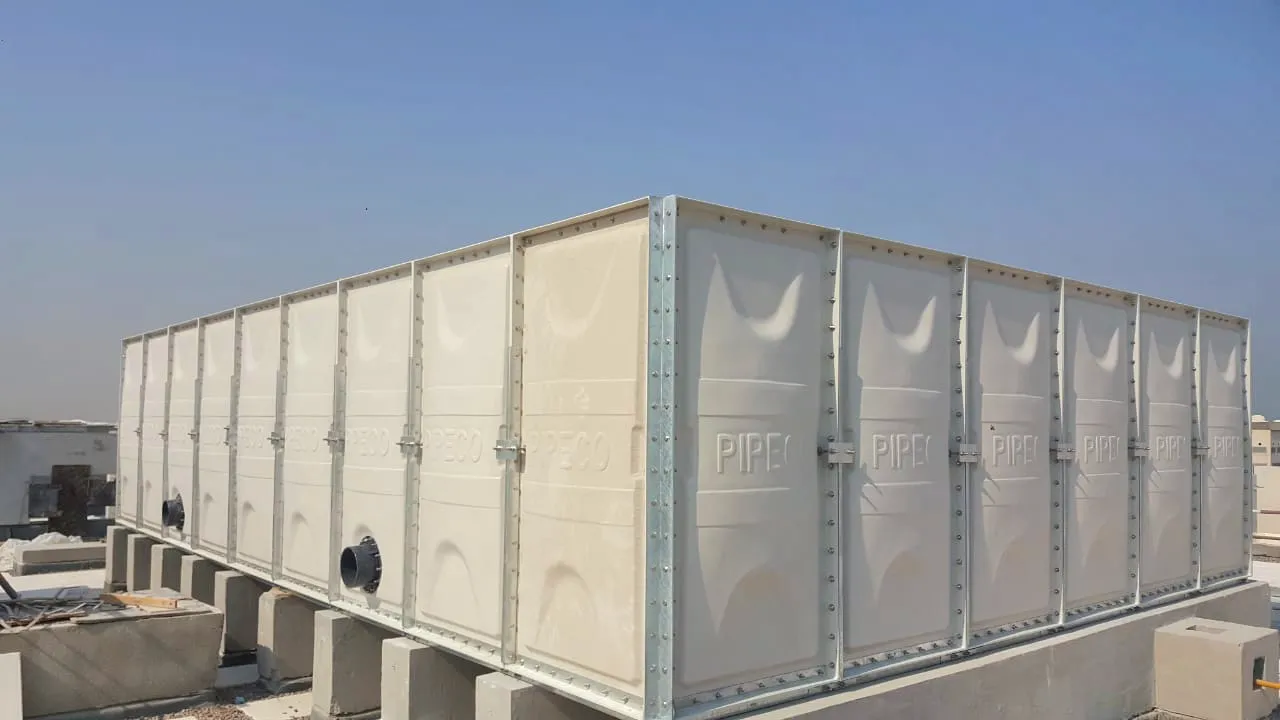
An FRP water tank is manufactured using fiberglass reinforcement combined with a polymer resin matrix to produce a lightweight yet structurally strong composite material. Depending on the application, these tanks may be produced as sectional modular panels, molded components, or integrated composite structures.
Sectional GRP (Glass Reinforced Plastic) water tanks are particularly popular for commercial and municipal projects because they can be transported as individual panels and assembled on site. This modular construction provides excellent flexibility for projects where transportation access, installation space, or future expansion are important considerations.
Because composite materials do not rust like carbon steel, FRP tanks are widely used in environments where long-term durability and corrosion resistance are important engineering requirements.
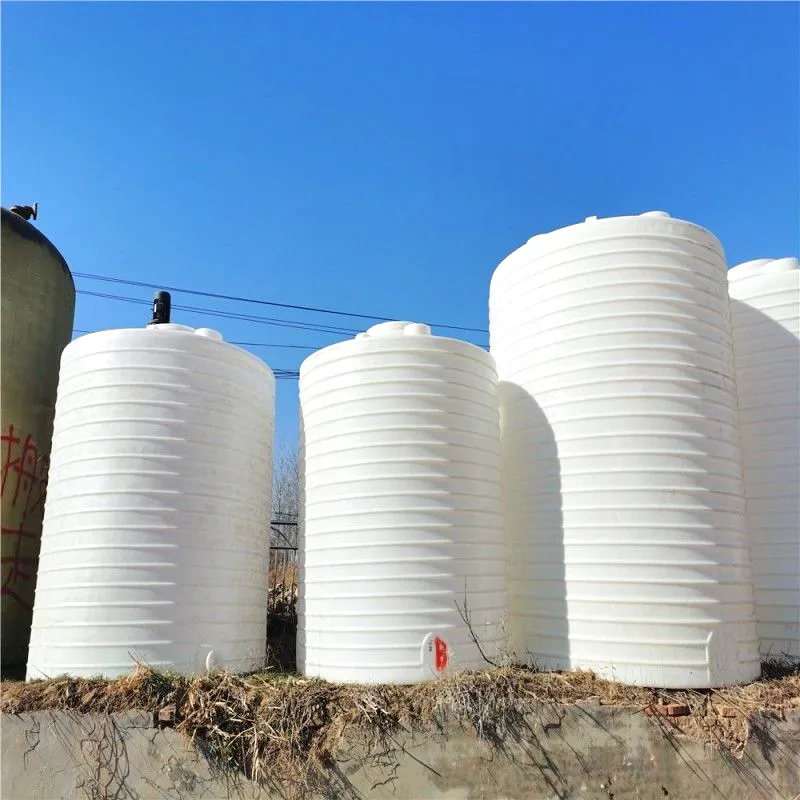
High-Density Polyethylene (HDPE) is a thermoplastic material widely used in rotationally molded water tanks for residential, agricultural, and light commercial applications. HDPE offers excellent chemical resistance, low weight, and relatively simple manufacturing processes, making it a popular choice for small to medium-sized storage tanks.
Unlike sectional GRP tanks, many HDPE tanks are manufactured as one-piece molded products. This eliminates panel assembly but may also introduce transportation limitations for larger capacities because the entire tank must be delivered as a single unit.
HDPE has become a widely accepted solution for domestic water storage, rainwater collection, and agricultural applications where storage volumes and structural demands remain within the practical limits of rotational molding technology.
Although FRP and HDPE tanks both provide corrosion-resistant alternatives to traditional steel or concrete storage systems, they are designed using fundamentally different engineering principles. FRP relies on fiber-reinforced composite construction to achieve high structural stiffness, while HDPE depends on the flexibility and toughness of thermoplastic materials.
These differences influence nearly every aspect of tank performance, including structural behavior, transportation, installation, maintenance, scalability, and long-term application suitability.
| Characteristic | FRP Water Tank | HDPE Water Tank |
|---|---|---|
| Primary Material | Fiberglass reinforced composite | High-density polyethylene |
| Typical Construction | Sectional or molded composite | Rotationally molded one-piece tank |
| Typical Applications | Commercial, industrial, municipal | Residential, agricultural, light commercial |
| Expansion Capability | Modular configurations available | Generally limited after installation |
| Transportation | Panelized systems for large tanks | Entire tank transported as one unit |
Understanding these engineering differences provides the foundation for selecting the most appropriate water storage solution. In the following sections, we will compare the two materials in greater technical detail, including structural performance, UV resistance, thermal behavior, installation, maintenance, lifecycle cost, and suitability for various industries.
One of the most significant differences between FRP and HDPE water tanks lies in their structural behavior under load. While both materials are capable of safely storing water when properly engineered, they achieve this performance through fundamentally different material properties.
FRP is a fiber-reinforced composite material in which glass fibers carry much of the structural load, while the resin matrix binds the fibers together and protects them from environmental exposure. This combination provides a high strength-to-weight ratio and excellent structural rigidity.
HDPE, by contrast, is a ductile thermoplastic. Its flexibility is beneficial for absorbing localized impacts, but larger tanks generally require thicker walls or additional design measures to control deformation under hydrostatic pressure.
For large-capacity commercial and municipal water storage systems, structural stiffness becomes increasingly important because hydrostatic pressure rises with water depth. Engineers evaluate not only material strength but also long-term deflection, support requirements, and dimensional stability throughout the tank's service life.
| Property | FRP Water Tank | HDPE Water Tank |
|---|---|---|
| Structural Stiffness | High | Moderate |
| Strength-to-Weight Ratio | Excellent | Good |
| Large Capacity Applications | Well suited for modular systems | More commonly used for small to medium capacities |
| Dimensional Stability | High | Depends on tank design and wall thickness |
Both FRP and HDPE offer significant corrosion resistance compared with traditional carbon steel tanks. This makes them attractive solutions for water storage in humid environments, coastal regions, agricultural facilities, and many industrial applications.
Unlike steel, neither material is prone to rust under normal service conditions. However, corrosion resistance should always be evaluated together with the intended application, stored medium, operating temperature, and relevant material specifications.
For potable water storage, manufacturers should use materials and production processes that comply with applicable drinking water standards in the target market.
| Environment | FRP | HDPE |
|---|---|---|
| Fresh Water | Excellent | Excellent |
| Coastal Areas | Excellent | Excellent |
| High Humidity | Excellent | Excellent |
| General Chemical Resistance | Depends on resin system | Depends on chemical compatibility |
Outdoor water tanks are continuously exposed to sunlight, ultraviolet radiation, wind, rain, and temperature fluctuations. Over time, these environmental conditions may influence the appearance and long-term performance of tank materials.
FRP tanks designed for outdoor applications are commonly manufactured with UV-resistant gel coats or protective surface layers that help reduce weathering and improve long-term durability. The effectiveness of this protection depends on the resin formulation, gel coat quality, manufacturing process, and maintenance practices.
HDPE tanks may also incorporate UV stabilizers during manufacturing. However, long-term outdoor performance depends on factors such as material grade, wall thickness, climate, and installation environment.
For installations in regions with intense solar radiation—such as parts of Africa, the Middle East, and Australia—material selection should consider UV resistance, operating temperature, expected service life, and manufacturer specifications rather than relying solely on material type.
Temperature changes can cause all engineering materials to expand and contract. In water storage systems, thermal movement influences pipe connections, support structures, seals, and overall dimensional stability.
HDPE generally has a higher coefficient of thermal expansion than fiber-reinforced composites. As a result, thermal movement may be more noticeable in certain installation conditions, particularly where tanks are exposed to large daily temperature variations.
FRP composites typically exhibit lower thermal expansion because the reinforcing glass fibers help restrain dimensional changes. This characteristic can be advantageous for larger installations where maintaining alignment between structural components and pipework is important.
| Engineering Consideration | Importance |
|---|---|
| Pipe Flexibility | Helps accommodate thermal movement. |
| Expansion Allowance | Reduces stress at connections. |
| Support Design | Maintains structural alignment. |
| Outdoor Installation | Requires evaluation of temperature variation. |
Transportation logistics play a significant role in selecting a water storage system, particularly for projects located in remote areas or regions with limited infrastructure.
Many HDPE tanks are delivered as complete one-piece units. This simplifies installation for smaller capacities but can make transportation more challenging as tank size increases.
Sectional FRP water tanks are supplied as modular panels that can be packed efficiently into shipping containers. This approach reduces transportation volume and enables on-site assembly, making large-capacity installations practical even where road access or lifting equipment is limited.
| Factor | FRP Sectional Tank | HDPE Tank |
|---|---|---|
| Container Shipping | Excellent | Limited by overall tank size |
| Large Capacity Transport | Highly suitable | May require special transport arrangements |
| On-site Assembly | Required | Usually minimal |
| Future Expansion | Often possible with modular systems | Generally requires tank replacement or additional tanks |
Maintenance requirements vary according to tank design, installation quality, operating conditions, inspection frequency, and environmental exposure. Regardless of material, regular inspection and cleaning are essential to maintaining water quality and extending service life.
Well-designed FRP tanks are valued for their corrosion resistance, structural durability, and suitability for long-term commercial or municipal service. HDPE tanks are appreciated for their simplicity and low maintenance, particularly in residential and light commercial applications.
Rather than focusing on a single expected lifespan, project owners should evaluate the complete operating environment, maintenance strategy, and manufacturer recommendations when estimating long-term performance.
The lowest purchase price does not always represent the lowest overall project cost. Transportation, installation, maintenance, operational reliability, future expansion, and replacement all contribute to the total lifecycle cost of a water storage system.
For small residential applications, a one-piece HDPE tank may provide an economical and practical solution. For larger commercial, industrial, or municipal projects, the modular design and scalability of FRP sectional tanks can provide long-term operational advantages, particularly where transportation efficiency and future capacity expansion are important considerations.
| Lifecycle Factor | FRP | HDPE |
|---|---|---|
| Initial Purchase | Project dependent | Project dependent |
| Transportation Efficiency | High for modular systems | Good for smaller tanks |
| Expansion Flexibility | High | Limited |
| Maintenance | Low with proper inspection | Low with proper inspection |
| Long-Term Value | Often advantageous for large infrastructure projects | Often advantageous for smaller installations |
There is no universal "best" water tank material for every project. The optimal choice depends on factors such as storage capacity, installation environment, transportation constraints, structural requirements, maintenance strategy, water quality standards, and future expansion plans.
While both FRP and HDPE tanks offer corrosion-resistant water storage, each material is better suited to different operating conditions. Understanding these differences helps engineers and project owners make informed decisions that balance performance, cost, and long-term reliability.
For residential homes, villas, and small apartment buildings, storage capacity requirements are generally modest, and installation simplicity is often a priority. One-piece HDPE tanks are commonly selected because they are lightweight, easy to transport, and require minimal assembly.
However, for luxury residential developments, high-rise buildings, or projects with rooftop space limitations, modular FRP tanks may offer additional flexibility by allowing on-site assembly where transporting a large one-piece tank is impractical.
| Residential Requirement | Recommended Consideration |
|---|---|
| Small Capacity | HDPE is often a practical choice. |
| Limited Access | FRP sectional tanks may simplify installation. |
| Rooftop Installation | Evaluate structural loading and available space. |
Hotels, shopping centers, office buildings, warehouses, and mixed-use developments typically require larger storage capacities than residential projects. Reliability, maintenance efficiency, and future expansion often become more important than minimizing the initial purchase price.
Sectional FRP tanks are frequently specified because they can be assembled inside mechanical rooms, rooftops, or confined spaces where transporting a fully assembled tank would be difficult.
Municipal water infrastructure generally requires large-capacity storage systems capable of operating continuously for many years. Engineers typically prioritize structural performance, durability, inspection accessibility, and lifecycle cost over short-term procurement savings.
Modular FRP sectional tanks provide flexibility for municipal projects because storage capacity can be configured according to site requirements while transportation remains efficient through panelized construction.
Agricultural projects often require economical and reliable water storage for irrigation, livestock, greenhouse operations, and seasonal rainwater harvesting.
Smaller farms may find HDPE tanks sufficient for localized storage, while larger agricultural developments often benefit from modular FRP systems that provide greater storage capacity and easier scalability as irrigation demand grows.
| Agricultural Scenario | Typical Solution |
|---|---|
| Small Farm | HDPE or FRP depending on capacity. |
| Commercial Irrigation | FRP sectional systems are commonly considered. |
| Rainwater Harvesting | Selection depends on storage volume and site layout. |
Industrial facilities and mining operations often present demanding operating conditions, including large water consumption, remote installation sites, and exposure to harsh environments. Storage systems must be designed for reliable long-term operation while minimizing maintenance interruptions.
Because sectional FRP tanks can be transported in modular form and assembled on-site, they are particularly suitable for projects where logistics play a major role in project planning.
Fire protection systems require dependable reserve water that remains available whenever an emergency occurs. Tank selection should comply with applicable fire protection regulations, project specifications, and local engineering standards.
For commercial and industrial fire water systems, engineers often evaluate structural reliability, inspection accessibility, maintenance requirements, and integration with pumps and pipework when selecting an appropriate storage solution.
Both FRP and HDPE tanks may be suitable depending on storage capacity and project requirements, although larger fire protection installations frequently utilize modular tank systems for improved scalability.
Environmental conditions play an important role in determining long-term tank performance. Rather than selecting a material based solely on cost, engineers should evaluate how climate influences durability, thermal movement, UV exposure, maintenance requirements, and operational reliability.
| Climate | Engineering Considerations |
|---|---|
| Hot Desert Regions | High UV exposure, elevated temperatures, thermal expansion. |
| Tropical Areas | High humidity, heavy rainfall, biological growth. |
| Coastal Regions | Salt-laden air, corrosion resistance, wind loading. |
| Cold Regions | Freeze protection, insulation, pipe design. |
Whether a project is located in Africa, the Middle East, Southeast Asia, or other regions, material selection should be based on the complete environmental profile rather than a single performance characteristic.
The following matrix summarizes typical project scenarios and the engineering considerations that often influence material selection. Actual decisions should always be based on project specifications, applicable standards, and manufacturer recommendations.
| Project Type | FRP Water Tank | HDPE Water Tank |
|---|---|---|
| Residential Home | Suitable for special layouts or larger capacities. | Common choice for standard domestic storage. |
| Commercial Building | Frequently specified. | Suitable for smaller auxiliary storage. |
| Municipal Water Supply | Widely used for modular large-capacity systems. | Less common for large municipal storage. |
| Agriculture | Suitable for medium to large irrigation systems. | Suitable for smaller installations. |
| Mining | Well suited for remote, high-capacity projects. | May be used for localized storage. |
| Industrial Facilities | Frequently selected for engineered systems. | Application dependent. |
| Future Capacity Expansion | Modular systems provide flexibility. | Expansion often requires additional tanks. |
A manufacturing company planned to expand its production capacity and required a new water storage system to support process water, sanitation, and emergency reserve supply. The project required approximately 300 m³ of storage capacity and was located in an industrial park where transportation access was limited by narrow roads and restricted lifting equipment.
During the design stage, the engineering team compared two potential solutions: a large one-piece HDPE water tank system and a modular FRP sectional water tank.
Several engineering factors influenced the final decision:
Because the storage system needed to be transported in standard containers, assembled inside a confined equipment area, and expanded in the future if production increased, the project team selected a modular FRP sectional water tank.
This example illustrates an important engineering principle: selecting a water tank should be based on project requirements rather than material preference alone. In many small-scale applications, HDPE remains an excellent solution, while modular FRP systems often become advantageous as project complexity and storage capacity increase.
Procurement decisions are sometimes based only on the initial purchase price. However, the true value of a water storage system depends on its performance throughout the entire operating life.
| Common Mistake | Recommended Engineering Practice |
|---|---|
| Comparing purchase price only. | Evaluate total lifecycle cost, including transportation, installation, maintenance, and expected service life. |
| Ignoring transportation constraints. | Consider access roads, lifting equipment, and container dimensions before selecting the tank. |
| Choosing capacity without future planning. | Allow for future expansion where long-term growth is expected. |
| Overlooking climate conditions. | Assess UV exposure, temperature variation, wind loads, and environmental factors. |
| Selecting based on material name alone. | Review the complete engineering design, manufacturing quality, and applicable standards. |
The following checklist can help engineers, contractors, distributors, and project owners identify the most appropriate solution for a specific project.
Both materials can provide reliable performance when properly engineered. In general, fiber-reinforced composites offer higher structural stiffness, while HDPE provides excellent impact resistance and flexibility for many smaller storage applications.
Large commercial, industrial, and municipal projects often benefit from modular FRP sectional tanks because they can be transported in panels, assembled on site, and expanded if future storage requirements increase.
Yes. Both materials offer excellent corrosion resistance compared with conventional carbon steel under normal operating conditions. Material compatibility should still be verified for the intended application and stored medium.
Outdoor performance depends on product design, UV protection, manufacturing quality, and environmental conditions. Tanks intended for long-term outdoor service should be manufactured with materials specifically designed for weather resistance.
Small HDPE tanks are generally easy to transport as complete units. For larger capacities, sectional FRP tanks can offer logistical advantages because the panels are shipped separately and assembled at the project site.
Many modular FRP tank systems can be reconfigured or expanded by adding compatible panel sections, subject to engineering design and manufacturer recommendations.
FRP water tanks are widely used in municipal infrastructure, commercial buildings, manufacturing facilities, agriculture, mining, healthcare, education, hospitality, and fire protection systems.
HDPE tanks manufactured for potable water applications may be suitable for drinking water storage when they comply with applicable regulations and certification requirements.
Useful information includes storage capacity, tank dimensions, installation location, foundation type, water application, environmental conditions, and any applicable design standards.
PIPECO provides GRP sectional water tank solutions for commercial, industrial, municipal, and infrastructure projects. Our team can assist with product selection, configuration recommendations, and export support based on specific project requirements.
Both FRP and HDPE water tanks play important roles in modern water storage systems. Rather than viewing one material as universally superior, engineers should evaluate each project according to storage capacity, installation environment, transportation logistics, maintenance expectations, regulatory requirements, and long-term operational objectives.
HDPE tanks are often an excellent solution for residential and light commercial applications where installation is straightforward and storage capacities are relatively modest. FRP sectional water tanks, meanwhile, offer significant advantages for medium- to large-scale projects that require modular construction, efficient transportation, structural reliability, and the flexibility to accommodate future expansion.
By focusing on engineering performance and lifecycle value instead of purchase price alone, project owners can select a water storage solution that supports reliable operation for many years while reducing maintenance challenges and improving overall project efficiency.
Every project has unique technical requirements. Whether you are designing a municipal water supply system, an industrial facility, a commercial development, or an agricultural irrigation project, selecting the appropriate storage solution starts with understanding your operating conditions and long-term objectives.
PIPECO manufactures high-quality GRP sectional water tanks in a wide range of capacities and configurations. Our team works with distributors, EPC contractors, consultants, and project owners worldwide to provide practical, engineering-focused water storage solutions for diverse applications.
Contact PIPECO today to discuss your project requirements and explore a GRP water tank solution tailored to your application.
Experience the brand Trusted by Renowned Companies across the GLOBE.
Pipeco stands at the forefront of the market, recognized as a premier manufacturer, supplier, and exporter specializing in top-tier GRP water tanks, stainless steel water tanks, and FRP Water Tank, Fiberglass Tank, SMC Water Tank committed to delivering unparalleled quality and excellence.
Get In Touch
Email: master@pipeco.cn
Tel: 0086-576-84616026
Address: No.2 Zhaofeng Road, Xinqian Street, Huangyan District, Taizhou City, Zhejiang Province, China