
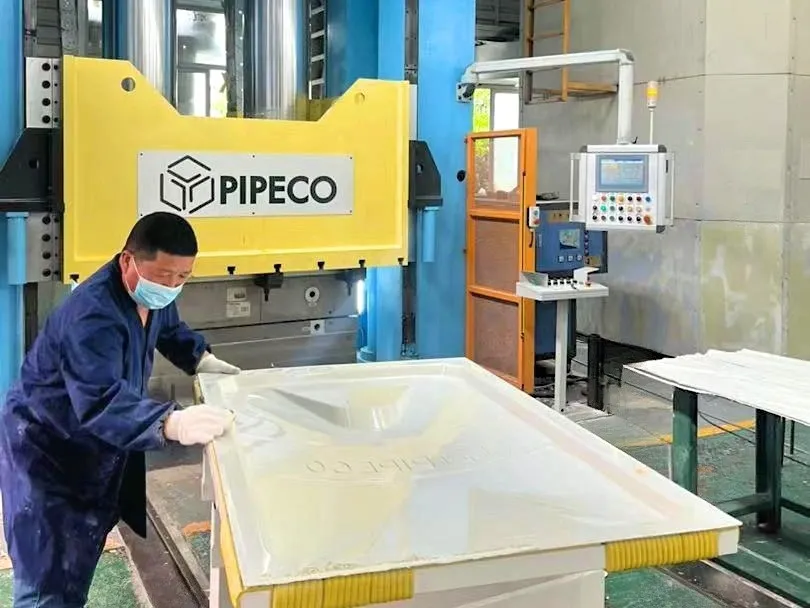
In modern urban infrastructure and industrial water management projects, the choice of water storage solutions is not just about immediate construction costs but also long-term operational efficiency and maintenance. Increasingly, SMC water tanks (Sheet Molding Compound water tanks) have emerged as a preferred alternative to traditional reinforced concrete tanks, offering both performance and economic advantages over the tank’s full lifecycle.
This article provides a comprehensive cost-benefit analysis comparing SMC water tanks to conventional reinforced concrete water tanks, highlighting key factors that make SMC tanks an attractive choice for modern water storage systems.
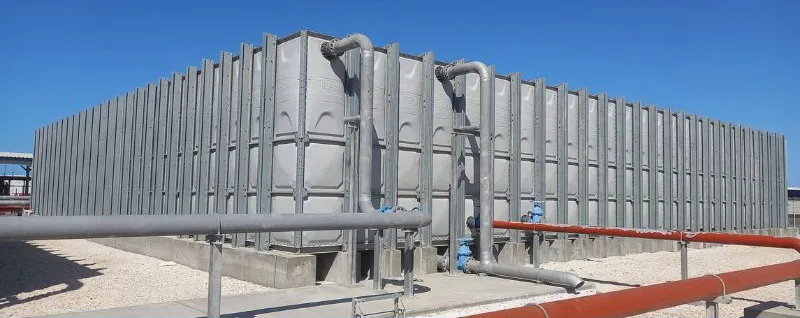
While reinforced concrete tanks require significant material quantities, labor, and curing time, SMC water tanks leverage pre-fabricated composite panels that drastically reduce installation complexity and construction duration. Key advantages include:
Overall, the capital expenditure for SMC tanks is often competitive with, or lower than, traditional concrete tanks when considering total project costs, particularly for medium to large-scale storage applications.
Traditional reinforced concrete tanks are prone to cracking, corrosion of embedded steel, and water seepage over time, requiring regular inspections, repairs, and sometimes complete renovation. In contrast, SMC water tanks offer superior durability with minimal maintenance due to their chemical resistance, non-corrosive nature, and stable mechanical properties.
By minimizing maintenance expenditures, SMC tanks provide clear cost savings over a 20–30 year service life compared to reinforced concrete alternatives.
SMC water tanks are lightweight yet structurally robust, allowing for flexible installation in urban rooftops, industrial sites, and areas with limited load-bearing capacity. This reduces the need for additional structural reinforcements. Moreover, SMC tanks are fully recyclable and environmentally friendly, aligning with sustainable construction practices.
SMC water tanks excel in mechanical strength, impact resistance, and chemical stability. Unlike concrete tanks that may develop microcracks or experience steel corrosion over time, SMC tanks maintain structural integrity even under extreme temperature variations or seismic events. Safety benefits include:
A holistic TCO comparison indicates that, while initial material costs for SMC water tanks may be slightly higher in certain cases, the reduced installation time, lower maintenance expenditure, extended service life, and operational efficiencies more than offset initial investment. Key points include:
For municipal, industrial, and commercial water storage projects, SMC tanks consistently demonstrate a lower lifecycle cost and higher overall value than reinforced concrete alternatives.
SMC water tanks offer a compelling combination of durability, operational efficiency, and cost-effectiveness. By reducing installation complexity, minimizing maintenance requirements, and delivering long-term structural integrity, SMC tanks surpass traditional reinforced concrete tanks in full lifecycle performance. For modern water storage projects seeking reliable, sustainable, and economically advantageous solutions, SMC water tanks present a superior choice.
Pipeco continues to lead in the design, manufacturing, and deployment of high-quality SMC water tanks, providing innovative solutions that optimize performance, safety, and cost-effectiveness for industrial and municipal applications worldwide.
Experience the brand Trusted by Renowned Companies across the GLOBE.
Pipeco stands at the forefront of the market, recognized as a premier manufacturer, supplier, and exporter specializing in top-tier GRP water tanks, stainless steel water tanks, and FRP Water Tank, Fiberglass Tank, SMC Water Tank committed to delivering unparalleled quality and excellence.
Get In Touch
Email: master@pipeco.cn
Tel: 0086-576-84616026
Address: No.2 Zhaofeng Road, Xinqian Street, Huangyan District, Taizhou City, Zhejiang Province, China