
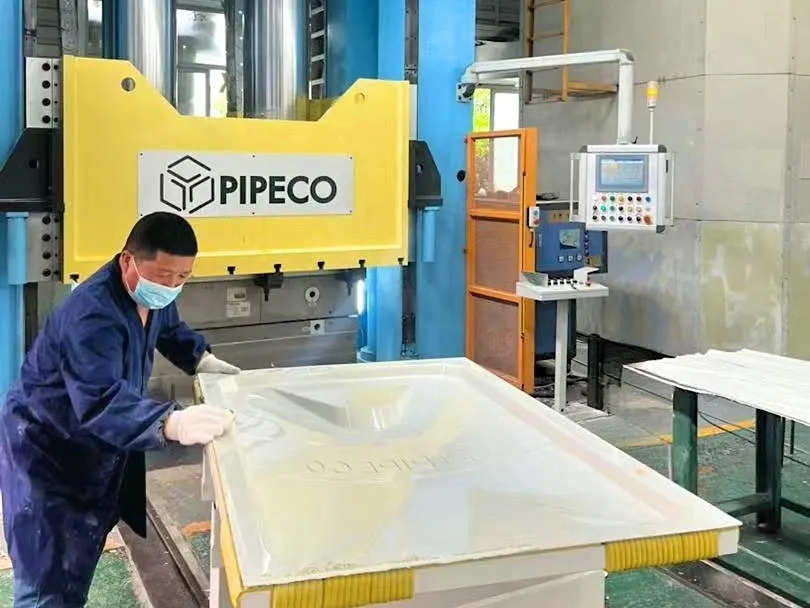
Have you ever seen a large water tank assembled from individual panels rather than delivered as one complete unit? This is the basic idea behind a GRP sectional water tank. Instead of transporting a bulky tank to the site, manufacturers supply individual composite panels that are assembled into a complete storage system.
GRP sectional tanks are used in residential buildings, hotels, schools, commercial properties, farms and industrial facilities. Their modular construction makes them particularly useful for projects that need flexible storage capacity or have limited access for transporting large equipment.
But what exactly is a GRP sectional water tank? How does it work, what makes it different from traditional concrete or steel tanks, and what should buyers consider before ordering one?
This guide explains the essentials in straightforward language, helping property owners, facility managers, contractors and purchasing teams understand the product before making a decision.
A GRP sectional water tank is a modular water storage system made from Glass Reinforced Plastic panels. The panels are manufactured separately, transported to the project site and assembled using a designed connection and sealing system.
Unlike a one-piece tank, a sectional tank is built on site from individual components. This makes transportation and installation more flexible, especially in buildings or locations where access is restricted. GRP composite materials can also provide good corrosion resistance when properly specified for the intended water and operating environment.
These tanks are commonly considered for commercial buildings, residential developments, schools, hotels, agricultural facilities and industrial water storage projects.
GRP stands for Glass Reinforced Plastic. It is a composite material made by combining a polymer resin with glass fiber reinforcement.
You can think of a GRP sectional tank as a large modular construction kit. Individual panels are manufactured in a controlled factory environment. At the project site, installers connect these panels according to the tank design to create the required storage structure.
The comparison with building blocks is useful for understanding the modular concept, but a real water tank is much more than a collection of panels. It needs engineered connections, appropriate sealing, internal supports where required and a suitable foundation or support structure.
The word "sectional" refers to the way the tank is constructed. Rather than being manufactured as one large container, the tank is divided into individual panels and components.
Depending on the manufacturer's system, these components may include:
A large one-piece tank can be difficult to transport through narrow access routes, into basements or onto certain building sites. A sectional tank can be delivered as separate components and assembled where it will be used.
This does not mean that every panel will fit through every doorway or elevator. The panel dimensions, transport route, lifting arrangements and available assembly space still need to be checked before ordering.

Understanding how a sectional tank is produced helps explain why manufacturing quality and installation workmanship both matter.
GRP panels are produced using a specified resin and glass fiber reinforcement system. The manufacturing process is controlled to achieve the required panel dimensions, thickness, surface condition and mechanical properties.
Panel specifications may vary according to tank dimensions, water depth, structural requirements and the manufacturer's design.
The required panels, connecting hardware, sealing materials and accessories are prepared for the project. Components need to be compatible with the selected tank configuration.
Correct identification and inspection of the supplied parts help reduce assembly errors at the installation site.
One practical advantage of sectional construction is that individual components can be transported separately. This can make delivery more manageable where road access, building entrances or lifting arrangements limit the movement of large assembled tanks.
Transport planning should still consider panel dimensions, packaging, handling protection and the route from the delivery vehicle to the installation area.
At the site, installers assemble the panels according to the manufacturer's drawings and installation instructions. Suitable gaskets or sealing materials are fitted at the specified joints, and connecting hardware is tightened using the required procedures.
The connection arrangement is important because the tank must retain water while carrying the loads created by the stored liquid and its own structure.
Inlet, outlet, overflow, drain and other specified connections are installed. Internal supports, roof components and access arrangements are checked before the tank is prepared for commissioning.
The completed tank should be inspected and tested in accordance with the manufacturer's instructions and the project requirements before being placed into normal service.
To learn more about composite panel production, see How GRP Water Tank Panels Are Manufactured.
Why do property owners and project buyers consider GRP sectional tanks? The answer is not simply that they are made from fiberglass. Their modular construction and composite material characteristics can offer practical advantages in the right applications.
Moving a large, fully assembled water tank into a basement, plant room or restricted building area can be difficult. Sectional tanks solve part of this problem by allowing individual panels to be transported separately.
This can be especially useful for building renovation projects, rooftop installations and sites with limited vehicle or lifting access.
Before ordering, however, buyers should confirm panel dimensions against doorways, corridors, elevators, staircases and the planned assembly route.
Unlike ordinary carbon steel, GRP does not develop iron rust. Its composite structure can provide good resistance to many common water-storage environments when the resin system and materials are properly selected.
This can make GRP an attractive option in locations where corrosion is an important consideration.
However, corrosion resistance does not mean that every GRP tank is suitable for every liquid or environmental condition. Chemical compatibility, water temperature, resin selection and exposure conditions should always be reviewed.
Because sectional tanks are assembled from individual panels, their dimensions can be configured to suit different project requirements.
This is useful when the available installation area has specific length, width or height restrictions. The final configuration must still follow the manufacturer's panel system and structural design limitations.
Some modular systems may allow future changes or extensions, but an existing tank should never be assumed to be easily expandable. Any modification needs to be reviewed for structural suitability, connection compatibility and installation requirements.
GRP composite tanks generally have a lower structural weight than comparable concrete tanks. This can simplify certain transportation and installation activities.
For rooftop and elevated installations, lower tank self-weight may be beneficial. However, the weight of stored water is usually a major part of the total load.
A full tank, its supporting structure, equipment and other design loads must all be considered by a qualified structural professional. A lightweight tank does not mean that a roof can support it without assessment.
A properly specified GRP tank does not require the same rust-control treatment as an ordinary carbon steel tank. This can simplify some aspects of routine maintenance.
Nevertheless, all water tanks need inspection. Sealing joints, covers, pipe connections, internal supports and water quality should be checked according to the operating conditions.
Actual service life depends on material quality, design, installation, environmental exposure and maintenance. Buyers should request product-specific technical information rather than relying on a general lifespan claim.
Sectional construction allows panels to be delivered separately and assembled at the installation location. This can reduce some transportation difficulties and avoid the need to move a complete tank into a restricted space.
Installation duration depends on tank size, site preparation, access, support arrangements, weather and the experience of the installation team. The project schedule should be confirmed with the manufacturer or contractor.
GRP is not the only material used for water storage. Concrete and steel tanks are also common, and each has a place in different applications.
The following comparison provides a general overview to help buyers understand the differences.
| Comparison | GRP Sectional Tank | Concrete Tank | Steel Tank |
|---|---|---|---|
| Construction | Assembled from composite panels | Cast or constructed as a concrete structure | Fabricated from steel plates or panels |
| Transportation | Individual panels can be transported separately | Construction materials and equipment are generally brought to the site | Depends on whether the tank is delivered assembled or in sections |
| Site Access | Can be useful where access for large equipment is restricted | Construction can be carried out on site but requires suitable working space | Depends on tank size, fabrication method and delivery arrangement |
| Corrosion | Does not develop iron rust; material compatibility still matters | Does not rust like steel, but concrete durability and reinforcement protection require attention | Corrosion protection depends on steel grade, coatings and maintenance |
| Structural Weight | Generally lighter than comparable concrete construction | High structural self-weight | Varies with steel grade, thickness and design |
| Installation | Requires panel assembly, sealing and support according to the design | Requires civil construction and appropriate curing or waterproofing work | May require fabrication, lifting, welding or sectional assembly |
| Maintenance | Inspect panels, joints, fittings and water quality | Inspect concrete condition, cracks, waterproofing and water quality | Inspect corrosion protection, coatings, welds and water quality |
| Typical Considerations | Modular installation and composite material performance | Permanent construction and civil engineering requirements | Steel grade, corrosion protection and fabrication quality |
This comparison is general rather than a universal performance ranking. Actual results depend on tank design, capacity, material grade, manufacturing quality, site conditions and maintenance.
For projects considering a metal storage option, PIPECO also provides stainless steel water tank solutions.
GRP sectional tanks can be used in many different environments. Their modular construction makes them particularly relevant to projects where a specific storage capacity must fit within an existing building or site layout.
Apartment buildings and residential developments may use centralized water storage to support domestic water distribution.
A sectional tank can be considered where the required capacity is too large for a small one-piece tank or where delivery access is restricted.
Hotels, hospitals and educational facilities need water for bathrooms, kitchens, cleaning and other daily services.
A suitable storage system can help these facilities manage changing demand and maintain a reserve during certain supply interruptions. Potable water applications must meet the applicable water quality and material requirements.
Farms may need water for irrigation, livestock and general agricultural operations. Storage can help coordinate water availability with irrigation schedules and seasonal demand.
For larger agricultural projects, tank capacity and configuration should reflect the water source, daily consumption and required reserve period.
Industrial facilities may use stored water for general utilities, cleaning, cooling and selected process applications.
The water's intended use is especially important in industrial environments. A tank designed for ordinary water storage should not automatically be used for aggressive chemicals or liquids with special temperature requirements.
Some projects use sectional tanks as part of a dedicated fire water storage system. These applications may have specific requirements for reserve volume, connections, access, structural design and applicable fire protection standards.
A standard domestic water tank should not automatically be assumed to meet fire protection requirements. The complete system must be specified and approved for its intended purpose.
One of the first questions buyers ask is: How much does a GRP sectional water tank cost?
There is no single price that applies to every project. Two tanks with similar capacities may have different quotations because their dimensions, panel specifications, accessories, support arrangements and installation conditions are not the same.
Understanding the main cost factors can help buyers prepare a more accurate quotation request.
Capacity is an important starting point. A larger tank generally requires more panels and materials, but the overall dimensions also matter.
Two tanks with the same volume may have different length, width and height configurations. This can affect panel quantities, structural arrangements and installation requirements.
Panel thickness and specifications are selected according to the tank design and operating conditions. Water depth, tank dimensions and structural requirements influence the design of the panels and support system.
Buyers should compare technical specifications rather than judging quotations by capacity alone.
A complete sectional tank may include more than wall and roof panels. The quotation may also cover:
Some projects require additional insulation or external protection because of local climate conditions or the intended water storage application.
These requirements should be specified before quotation. Insulation design, material selection and external protection can affect the total project cost.
Delivery distance, packaging, site access, unloading equipment, assembly work and foundation preparation can all affect the total project budget.
For overseas projects, buyers should also clarify the delivery terms and whether installation services are included in the quotation.
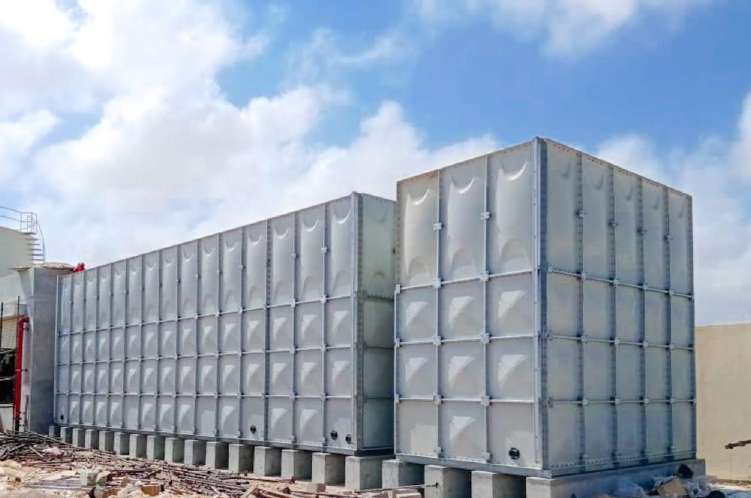
A water tank is a long-term part of a building or facility's infrastructure. Before placing an order, buyers should confirm that the proposed system is suitable for the actual site and intended use.
Is the tank for drinking water, domestic water, irrigation or industrial utility water?
Potable water applications require particular attention to the suitability of all water-contact components. Ask the supplier for relevant documentation and confirm that the complete tank system meets the applicable local requirements.
Check the maximum available length, width and height. Also consider the delivery route, panel handling space, assembly access and future maintenance clearance.
A sectional tank needs a suitable supporting arrangement. The required base or support structure depends on the manufacturer's design and installation instructions.
Do not assume that every sectional tank can be placed on any flat surface or supported by any beam arrangement. Confirm the approved support details before construction begins.
Panel joints are important parts of the tank's water-retaining structure. Ask what sealing materials are used, how connections are assembled and what inspection procedures are required.
A professional quotation should be supported by appropriate technical documentation. Depending on the project, useful information may include:
Make sure the tank has suitable access for inspection and cleaning. Covers, vents, overflow arrangements, connections and internal components should be accessible according to the design.
You can also read our guide to water tank maintenance for more information.
A properly designed and installed GRP sectional tank uses suitable gaskets or sealing materials at panel joints. These materials help create a water-tight connection between the panels.
However, leakage can occur if the sealing material is unsuitable, panels are damaged, connections are incorrectly tightened or the tank is installed on an unsuitable support structure. Correct installation and inspection are essential.
Installation time depends on tank capacity, panel configuration, site access, support preparation, weather and the installation team's experience.
A smaller, straightforward installation may take less time than a large commercial system with complex access and support requirements. The manufacturer or installation contractor should provide a realistic project schedule.
Outdoor installation is possible when the tank's material system and design are suitable for the expected environmental conditions.
Direct sunlight, temperature changes and local weather conditions should be considered when specifying the tank. Buyers should ask the manufacturer about UV-related material provisions and any recommended external protection.
Outdoor water storage should also be protected against contamination. Proper covers, protected openings and routine inspection are important for maintaining water quality.
There is no single cleaning interval suitable for every tank. Frequency depends on the water source, intended use, water quality, local regulations and inspection findings.
Establish a regular inspection and cleaning schedule based on applicable guidance and the manufacturer's recommendations. Potable water tanks may be subject to specific local requirements.
It can be suitable for potable water when the complete tank system is specified for that purpose. This includes the panels, gaskets, fittings, coatings where applicable and all other components that contact the stored water.
Always request relevant product documentation and verify compliance with the requirements applicable in the destination market.
Rooftop installation may be possible, but the supporting structure must be assessed for the complete load. This includes the weight of stored water, the tank itself, support components and other relevant design loads.
A qualified structural professional should confirm that the building can safely support the proposed installation.
Some modular tank systems may offer configuration flexibility, but an existing tank should not be assumed to be expandable simply by adding panels.
Any proposed modification must be checked against the manufacturer's design, panel compatibility, support arrangement, joint system and structural requirements.
The price depends on capacity, dimensions, panel specifications, structural design, accessories, insulation requirements, transportation and installation conditions.
For an accurate quotation, provide the required capacity, installation location, available dimensions and intended water use.
A GRP sectional water tank is a modular storage solution made from glass-reinforced plastic panels. Its main practical advantages include flexible transportation, on-site assembly and the ability to configure tank dimensions for different project requirements.
These characteristics make GRP sectional tanks worth considering for residential developments, commercial buildings, schools, hotels, farms and industrial facilities.
However, choosing the right tank involves more than comparing capacity and price. Buyers should also consider material specifications, water quality requirements, joint sealing, structural support, installation conditions and maintenance.
By reviewing these factors before purchasing, property owners and project buyers can make a more informed decision and select a storage system suited to their actual needs.
PIPECO provides water storage solutions, including GRP and stainless steel water tanks, for different project requirements.
Whether you are planning a residential development, commercial building, agricultural facility or industrial water storage project, sharing your required capacity, installation location and intended water use is a good starting point.
Visit the PIPECO GRP water tank page to learn more about the product, or contact PIPECO to discuss your project requirements.
Experience the brand Trusted by Renowned Companies across the GLOBE.
Pipeco stands at the forefront of the market, recognized as a premier manufacturer, supplier, and exporter specializing in top-tier GRP water tanks, stainless steel water tanks, and FRP Water Tank, Fiberglass Tank, SMC Water Tank committed to delivering unparalleled quality and excellence.
Get In Touch
Email: master@pipeco.cn
Tel: 0086-576-84616026
Address: No.2 Zhaofeng Road, Xinqian Street, Huangyan District, Taizhou City, Zhejiang Province, China